Most people think all jackals are sneaky savanna scavengers. The side-striped jackal doesn’t fit the mold. It’s quiet, overlooked and full of surprises.

- It prefers the shadows. Unlike the black-backed jackal of open plains, it favors woodlands, marshes and dense vegetation in Africa’s wetter regions.
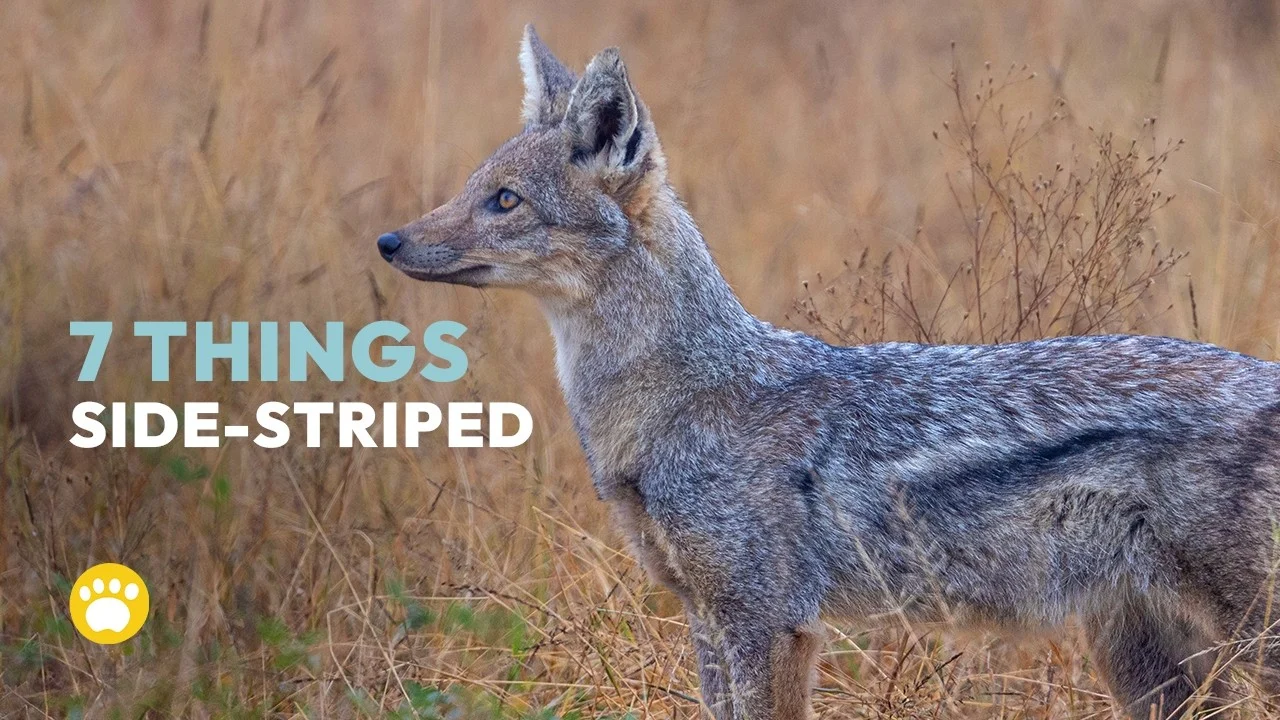
- The stripes are camouflage. Faint white or gray lines along its sides break up its outline in tall grass, especially at twilight.
- It eats almost anything. Rodents, insects, fruit, frogs and even human garbage, one of the most varied diets of any African canid.
- It avoids fights. More passive than other jackals, it rarely challenges rivals over land or food, which helps it coexist with other animals and people.
- Family ties are strong. Pairs mate for life, raise pups together, and older offspring sometimes stay to help with the next litter.
- It’s a cleanup crew. Eating carrion and controlling rodents, it helps limit disease.
- It barks like a dog. Its call is a series of hooting barks, like an owl mixed with a distant dog.
The takeaway
The side-striped jackal isn’t flashy, but once you know it, it’s clearly one of Africa’s most unique canids.