
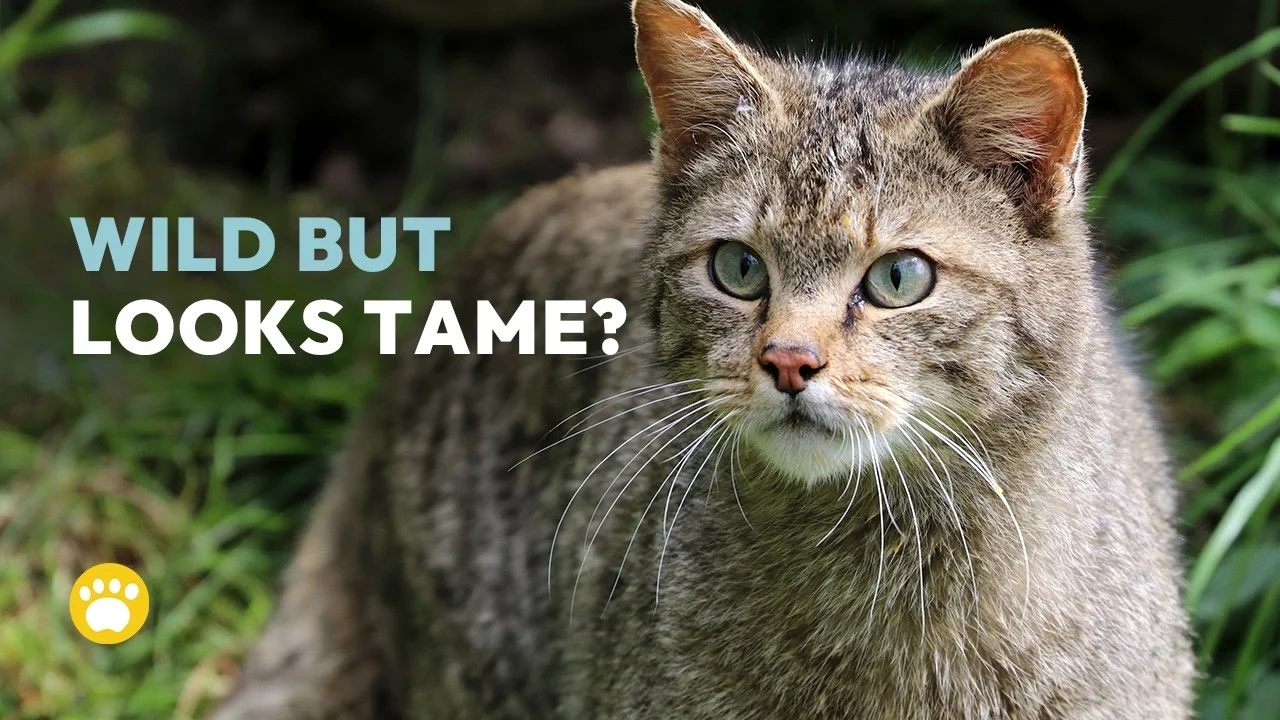
You might think it’s just a chunky stray, but the cat roaming the woods could be an Ice Age survivor. The European wildcat may look like your tabby, but it lives by its own rules.


- It’s not a runaway house cat. Wildcats look like bulkier, bushier domestic cats, with a thick, blunt-tipped tail.
- It’s ancient. Its ancestors go back over 2 million years, surviving Ice Ages and human expansion.
- It wants nothing to do with us. It avoids towns, trails and anywhere that smells human. If it sees you first, you’ll never know it was there.
- It’s vanished from much of Europe. It’s long gone from places like England; today it’s mostly found in rugged parts of Spain, Scotland, the Balkans and Central Europe.
- It doesn’t meow. It communicates with growls and hisses, not friendly meows or purrs.
- The tail is the giveaway. Thick, ringed and blunt-tipped. See that, and you’ve spotted something few people ever do.
- It’s under threat. Habitat loss, road accidents and interbreeding with feral cats are pushing it toward genetic extinction.
- It doesn’t share. Highly territorial, males can roam territories of more than 11 square miles.
- Kittens learn fast. Raised in secrecy, they learn to stalk and hunt within weeks and go solo by one year.
- Saving it is hard. Wildcats and hybrids look so alike that conservationists often need DNA tests to tell them apart.
The takeaway
The European wildcat’s quiet crisis is hybridization: a cat that blends in too well, losing itself to its domestic cousins. Time is running out to protect the real thing.


