There is an animal that lions give up on. They bite it, roll it and paw at it for minutes, then walk away hungry. It has no teeth, no speed and no real weapons, yet the biggest predators in Africa often cannot get through its defense. Meet the pangolin.
Pangolin at a glance
- Species 8: four in Asia, four in Africa
- Size About 4 pounds to over 70 pounds
- Diet Around 70 million ants and termites a year
- Tongue Up to 28 inches in some species
- Status All eight species threatened
A mammal, not a reptile
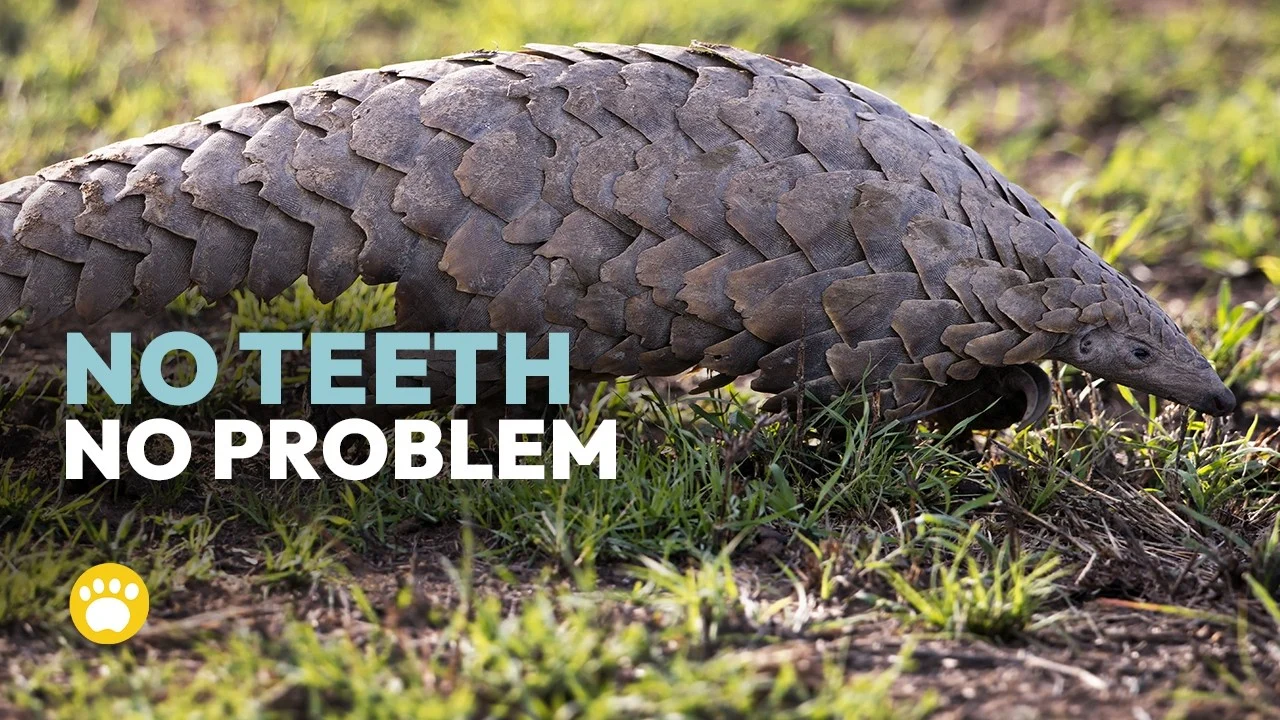
At first glance most people guess it is a reptile. It is not. The pangolin is a mammal, and the only mammal on Earth covered almost entirely in scales.
Those scales are made of keratin, the same material as your fingernails and hair. They overlap from head to tail and make up about 20 percent of the animal’s body weight. Like your nails, they keep growing for its whole life, with the edges worn down as it digs.
The roll-up defense
The name comes from a Malay word meaning “something that rolls up,” and that is exactly what it does. When threatened, a pangolin curls into a tight ball and tucks its soft belly inside. If that does not work, it can swing its tail, and the sharp edges of the scales can cut skin. Older pangolins often carry scratches from attacks that failed.

No teeth, and a tongue anchored by its pelvis
A pangolin has no teeth at all. Instead it has a tongue that, in some species, stretches up to 28 inches. That tongue does not attach in the mouth like ours. It is anchored down near the pelvis and the last pair of ribs, and stays coiled inside the body until needed.
Here is how a pangolin eats:
- It rips open ant hills and termite mounds with its curved front claws.
- It sends that sticky tongue deep into the tunnels.
- It closes its ears and nostrils to keep angry ants out, while thick eyelids protect its eyes.
- Since it cannot chew, it swallows small stones that grind up insects in a muscular part of the stomach, much like a bird’s gizzard.
Free pest control, and a gift to the forest
One adult can eat around 70 million ants and termites in a single year, which makes it free pest control for farms and forests. Its digging loosens and mixes the soil, which helps plants grow. And when it leaves a burrow behind, other animals move in. One study in Taiwan recorded 12 different mammal species using old pangolin burrows.

Eight species, some very odd
Some pangolins live on the ground. Others climb trees, gripping branches with their tails.
- The long-tailed pangolin of Africa has more tail bones than any other mammal, with a bare pad at the tip that works almost like a fingertip. It is also the only pangolin active during the day.
- Many ground pangolins walk upright on their back legs, using the heavy tail for balance, a little like a small dinosaur.
Closer to cats than anteaters
Pangolins look a lot like anteaters and armadillos, but DNA shows their closest living relatives are carnivores, the group that includes dogs, cats and bears. The two lines split somewhere around 57 to 67 million years ago.
One baby a year
A mother usually has just one baby a year. The pup is born with soft, pale scales that start hardening within about two days. Once it is old enough, it rides on the base of its mother’s tail while she searches for food. If danger shows up, she curls her whole body around the baby.
Why you rarely see them in zoos
Pangolins are very sensitive animals. Stress can give them stomach ulcers and internal bleeding, and in captivity they often refuse food that is not their natural diet. One rescue center needed about 50 pounds of live ants to feed 70 pangolins for a single day.
The takeaway
All eight species are now listed as threatened, and the Philippine pangolin is critically endangered. The same rolling defense that stops a lion does nothing against a person who simply picks it up. An armor that worked for millions of years has one weakness, and it walks on two legs.