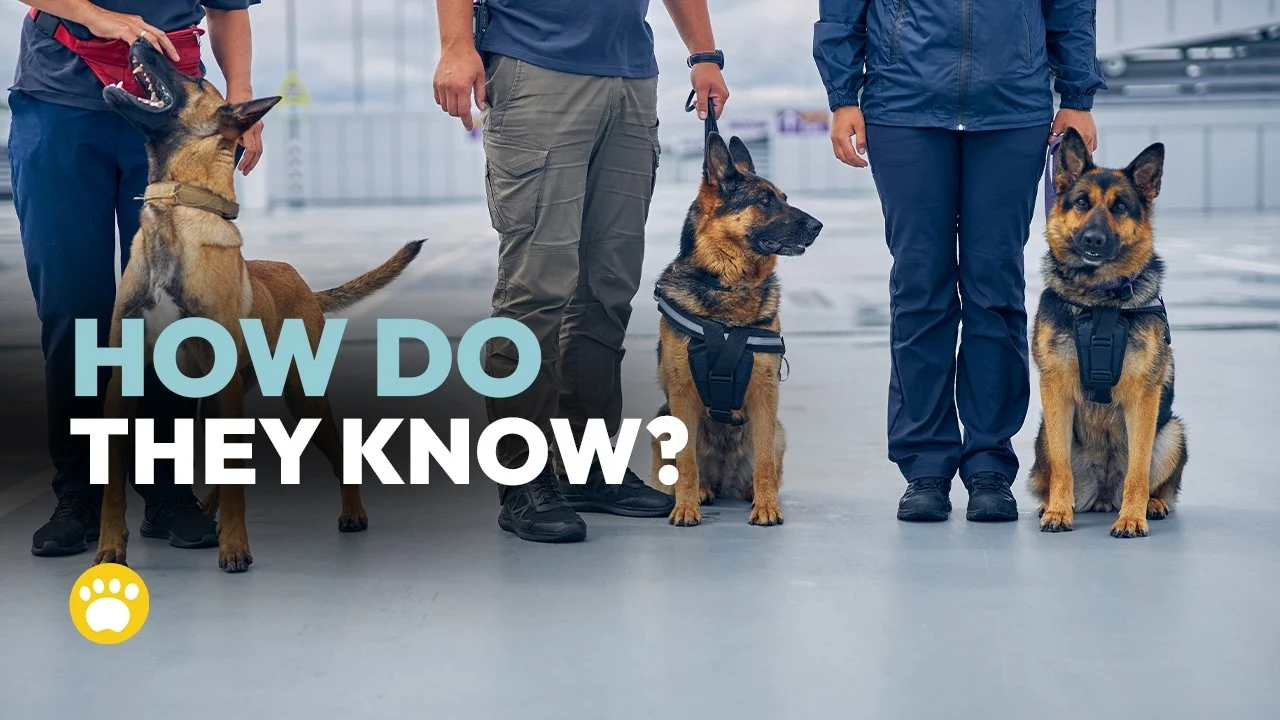
Somewhere in a training area, an odor has been hidden. The dog cannot see it, and the handler is not supposed to point it out. Yet within moments the dog begins narrowing the search. To us it looks like sniffing. To the dog, it is a carefully learned game with one correct answer. So how do trainers build that behavior, and how do they know they can trust it?
Step 1: The right dog and the right reward
A potential detection dog needs the confidence to explore, the focus to keep working, and a powerful desire for a reward: a toy, play, praise or another positive experience. The key is the connection. Finding the target makes something the dog loves happen. The work may protect people, but from the dog’s point of view, the search is a game worth finishing.
Step 2: Giving one odor special value
In simple exercises, the dog encounters the target odor and is rewarded for locating it. Repetition builds an association: this smell predicts the game. Hides start easy and become less obvious, while unrelated smells go unrewarded. The dog is not learning the name of a substance. It is learning which scent pattern matters and which ones do not.

Step 3: Learning that some searches are empty
Some training areas contain no target odor at all. These blank searches teach the team to finish without forcing an alert just because the handler expects one. Trainers also place tempting distractions nearby, such as food or unfamiliar smells. Reward arrives only for the trained target.
Step 4: Learning how to search
The handler guides the team through a room, vehicle, roadway or open area so gaps aren’t missed. Airflow can carry odor away from its source, so the first change in behavior may happen before the dog reaches the hide. Watch closely and you may see the pace change, the head turn, or the dog work back and forth as it closes in.
Step 5: A clear final response
Finding the general area is not enough. The dog needs a consistent response that says “it is here”: sitting, stopping, staring or holding position near the source, depending on the program. For explosive detection, a passive response also helps the dog avoid disturbing the area.

Step 6: Training the handler too
This is not a machine giving a readout. The handler must read the dog’s body language without steering it toward an expected answer. A glance, a pause or a change in leash tension can accidentally influence a dog, so good training tests both members of the team.
Step 7: Changing the problem
Once the basic behavior is reliable, hides move to different heights and depths, search areas get larger, and new buildings, vehicles, surfaces, noises and smells are introduced. The goal is not to memorize one training room but to find the target odor in places the team has never searched.
Step 8: Proving it, again and again
Finally, the team is evaluated. Can the dog find the correct odor? Can the handler control the search without giving the answer away? Records, validation and certification show the result is repeatable.
The takeaway
Passing once is not the finish line. Detection teams keep training because odor moves, environments change, and reliability has to be maintained. What begins as a game becomes a working partnership, one search and one reward at a time.