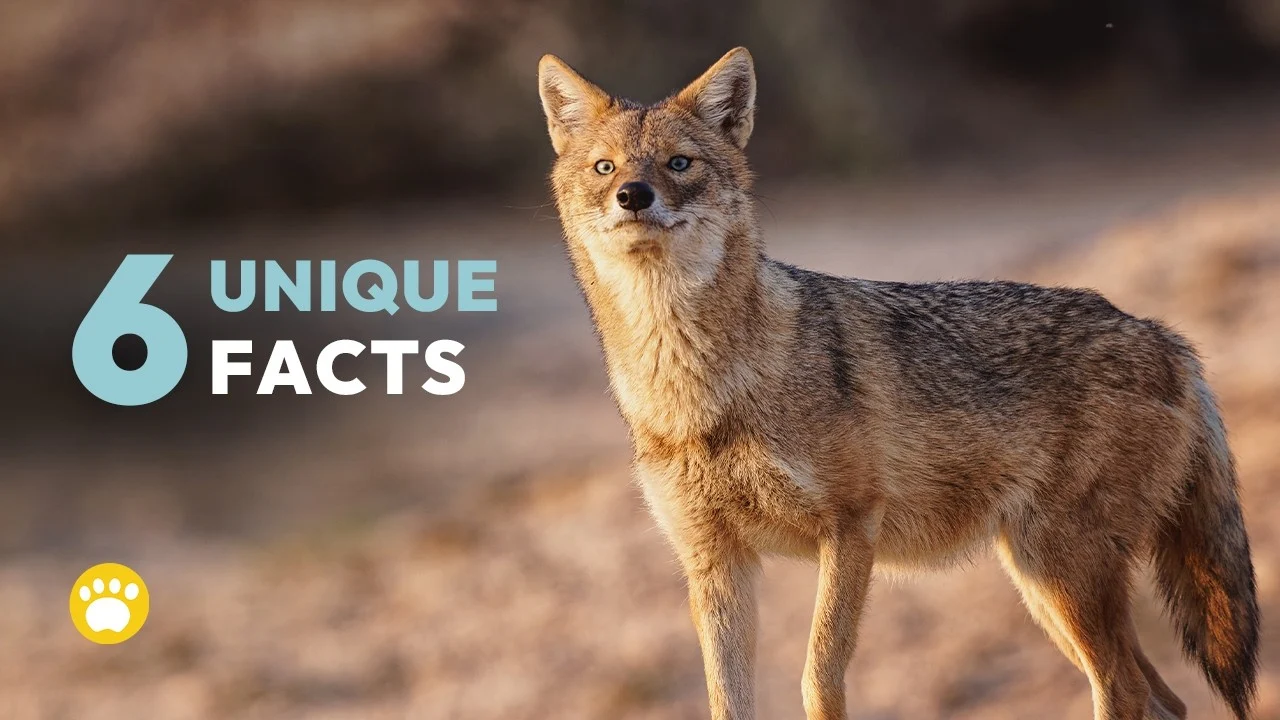
Most people think of jackals as African scavengers, but one species is rewriting that image across three continents. The golden jackal, Canis aureus, is unlike any other member of its kind.
1. The only jackal in Europe
It’s the only jackal species living naturally outside Africa, ranging from Southeast Asia to the Balkans and expanding through Central and Northern Europe as far as Estonia, Finland and even Spain. Unlike invasive species, it got there on its own, without human release.
2. Ancient ancestry
Its lineage traces back to the extinct Arno River dog, a small Pleistocene canid in Southern Europe about 1.9 million years ago, linking it more closely to wolves and coyotes than to African jackals.

3. Long-distance travelers
Research has documented individuals moving more than 745 miles from their original range. That mobility, plus adaptability, explains their rapid spread across Europe.
4. Family helpers
Golden jackals often keep offspring from earlier litters to help raise new pups with feeding, protection and teaching, which boosts pup survival.

5. Sulimov dogs
It’s the only wild canid used in a systematic hybridization program for scent detection. In Russia, scientists crossed golden jackals with dogs to create Sulimov dogs, trained to detect explosives and other scents at Moscow’s Sheremetyevo Airport.
6. Fertile hybrids with wolves and dogs
Genetic studies confirm golden jackals can produce fertile offspring with both domestic dogs and gray wolves, and those hybrids can breed back into jackal or wolf populations, which makes genetic monitoring important where ranges overlap.
The takeaway
Europe’s only native jackal, an ancient lineage and the inspiration for a scent-detection hybrid: the golden jackal’s natural expansion makes it one of the most interesting carnivores to watch.