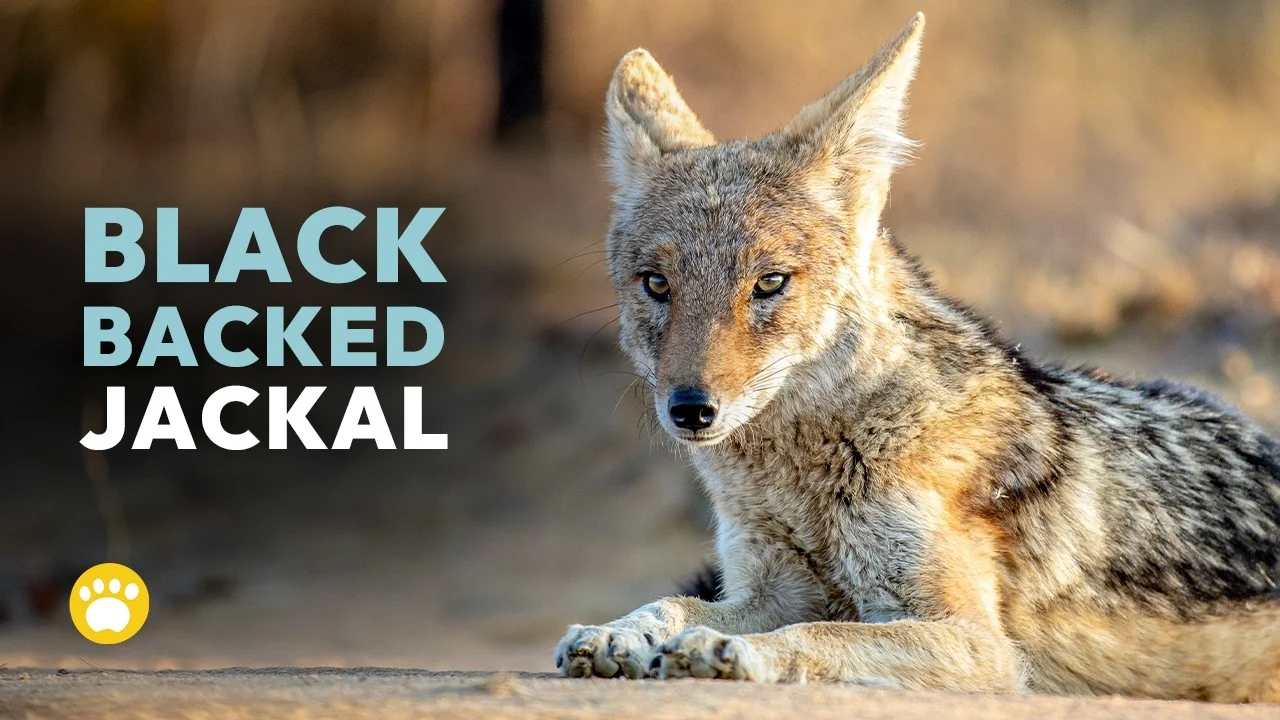
Lions may dominate the headlines, but one of Africa’s most successful predators is much smaller: the black-backed jackal, a wild canine built for survival.
Black-backed jackal at a glance
- Weight 13 to 29 pounds
- Range Southern Africa, plus East Africa and the Horn
- Litter 3 to 6 pups after about two months
- Status Least concern
Two separate populations
One population lives across southern Africa, another far up in East Africa and the Horn. Despite being separated by hundreds of miles, they thrive in both regions.
How to spot one
Look for the black-and-silver saddle on its back, combined with reddish-brown fur and tall pointed ears.

A flexible diet
One day it’s rodents and hares; another it’s insects, fruit or carrion. That flexibility lets jackals live in grassland, scrub, coastal areas and even near people, and they help balance ecosystems by controlling small prey and cleaning up carcasses.
A family that sticks together
Black-backed jackals live as lifelong pairs, holding territories year-round. Older offspring often stay on as helpers, guarding the den and bringing food to younger pups, a cooperative system that boosts survival and is rare in small wild canines. Pairs also duet, calling together with high-pitched howls and yelps to mark territory; scientists even use these calls to estimate populations.

Growing up fast
Pups peek outside the den within three weeks, join hunting trips by 14 weeks, and can breed by 11 months.
The challenges
Jackals sometimes take young sheep or goats, creating conflict with farmers, and they play a role in rabies cycles, catching it from domestic dogs or sustaining outbreaks among wildlife. Major outbreaks can collapse entire territories.
The takeaway
More than a scavenger, the black-backed jackal regulates prey, cleans up carcasses and models cooperation: proof that survival isn’t about size but strategy.