There’s a dog that has walked beside humans for over 6,000 years. Egyptian pharaohs kept it in their palaces, and Central African tribesmen relied on it to survive. Most people in the United States have never seen one. This is the Basenji, and its most famous quality isn’t what it can do. It’s what it can’t.
Basenji at a glance
- Height 16 to 17 inches
- Weight 22 to 24 pounds
- Speed 30 to 35 mph
- Puppy price $1,500 to $2,500
- Lifespan 13 to 14 years
The dog that can’t bark
In the dense forests of the Congo basin, tribes needed a hunting dog with speed, silence and the ability to think for itself. A dog that barked would spook the game. Over thousands of years, an animal emerged whose larynx is shaped differently from every other domestic dog. The Basenji physically cannot bark. Instead it makes what owners call a baroo, somewhere between a yodel, a howl and a chortle.
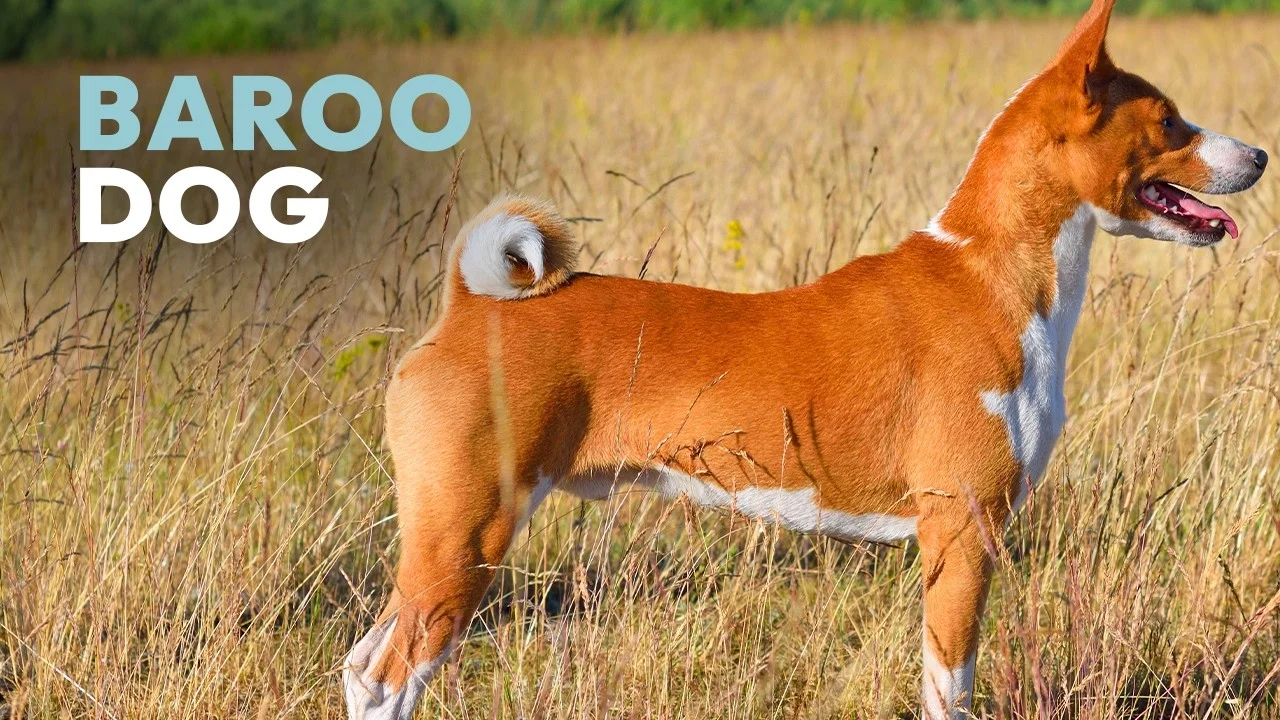
Egyptian artifacts from 3000 BC depict dogs with the same curled tail and erect ears. The breed didn’t reach the United States until the 1940s, and nearly every Basenji here descends from a handful of original imports.

Built for the forest
The tail curls tightly over the back, and its white tip wasn’t accidental: in the low light of an African forest, that flash of white helped hunters track a silent dog. The fastest Basenji recorded in AKC competition hit 30.83 mph in a 100-yard sprint. That’s a 22-pound dog moving at highway speed.
Low maintenance, for an unusual reason
The Basenji grooms itself like a cat, paws working across its face and tongue through its coat. Basenjis carry virtually no dog odor, and the short coat sheds minimally. They bond deeply but selectively, often choosing one person. If you want a dog that treats its loyalty as something earned, this is it.

What the photos don’t show
The Basenji was bred to make decisions without waiting for instructions, and that instinct doesn’t switch off in your living room. It ranks among the least responsive breeds to obedience commands, not for lack of intelligence, but because it evaluates whether a command is worth following.
- A bored Basenji will dismantle a couch cushion, pry open a cabinet and figure out a lever door handle in an afternoon.
- Prey drive makes off-leash time dangerous without a secure fence, and they can climb chain-link.
- Training must be short, positive and high-reward; a bored Basenji has already mentally left the room.
Health: Fanconi syndrome
The main breed-specific risk is Fanconi syndrome, a hereditary kidney condition with symptoms typically appearing between four and eight years of age. A DNA test exists. Any reputable breeder will provide the documentation; if they can’t, walk away.
Who is the Basenji for?
Active people who want a quiet dog that won’t bother the neighbors, and who find an independent companion more interesting than an obedient one. Not for first-time owners or anyone who needs reliable off-leash control.