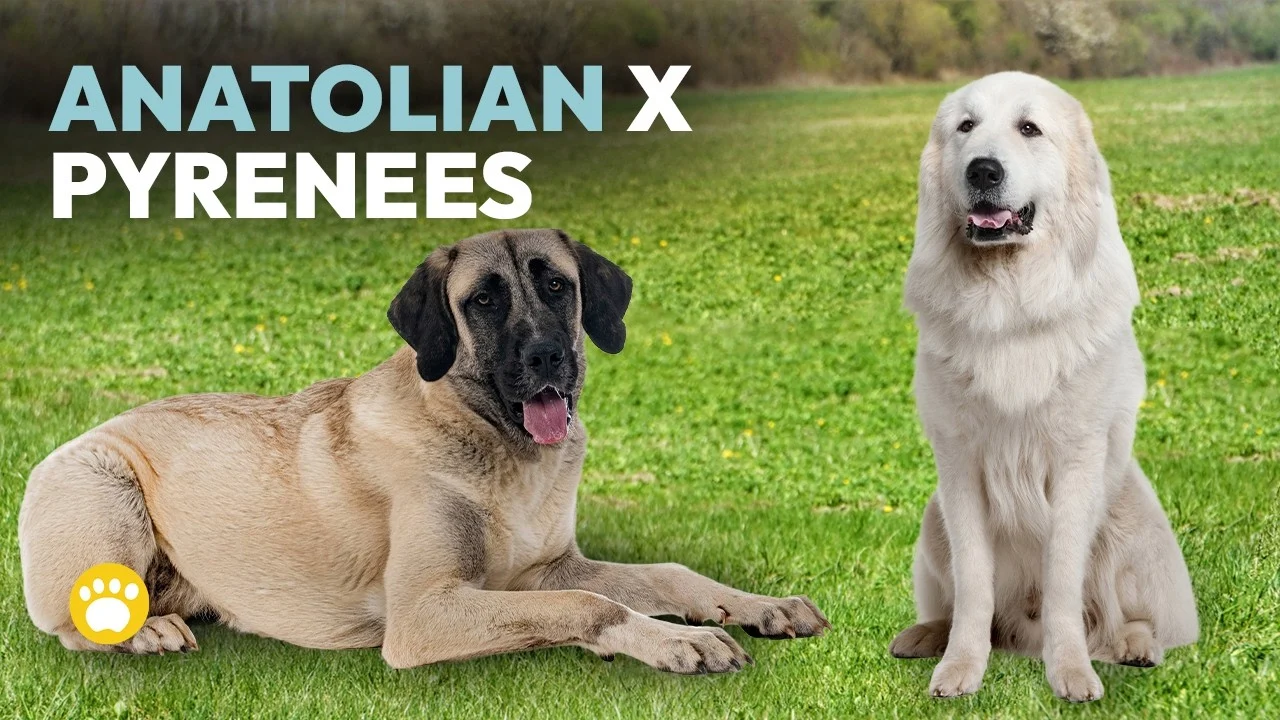
There is a dog that can weigh more than the person walking it, sleep through an entire afternoon without moving, then spend the whole night patrolling a fence line you didn’t know it had memorized. That is the Anatolian Pyrenees, a cross between the Anatolian Shepherd and the Great Pyrenees. People see the fluffy white puppy and expect a teddy bear. What they get is a working guardian with thousands of years of instinct.
Anatolian Pyrenees at a glance
- Weight Usually 80 to 140 pounds
- Fence Physical, 5 to 6 feet minimum
- Reliable by About 2 years old
- Food cost Roughly $120 to $300 a month
- Lifespan 10 to 12 years
The parents
The Anatolian Shepherd comes from Turkey, where dogs of this type have guarded flocks for around six thousand years, bred to handle a predator without waiting for a human’s instruction. The Great Pyrenees comes from the mountains between France and Spain, where it did the same job against wolves and bears; King Louis XIV named it the Royal Dog of France in 1675.
No kennel club recognizes the mix, so there is no standard and no way to know at eight weeks exactly what you’re signing up for. Expect a thick double coat, often white or cream with tan markings, and often double dewclaws on the back legs, extra toes that helped their ancestors grip mountain rock.
Surprise 1: Independent, and loud at night
These dogs aren’t obedient the way a retriever is. They were bred to judge a situation and act alone, so when you give a command, the dog considers whether it’s worth following.
Both parent breeds are naturally nocturnal, because predators moved at night while the shepherd slept. Yours will patrol after dark and bark at a deer three properties over, a car door, a raccoon in the trash. Training doesn’t remove it, because the dog doesn’t think it’s misbehaving. It thinks it’s working.

Surprise 2: Roaming
This is the one that gets dogs killed on roads. An adult Great Pyrenees will patrol a radius of one to two miles if nothing stops it.
- Use physical fencing of at least five to six feet. Some dogs still find a toehold and go over, or dig under.
- Avoid buried electric fencing: the thick coat blocks contact and these dogs have a high pain tolerance.
- Fit self-latching gates; a hundred-pound dog can nose a simple latch open.
Training and socialization
The window that matters most runs from about 8 to 16 weeks, when the puppy needs calm exposure to strangers, other dogs, traffic noise and children. Skip it and wariness can harden into fear-based aggression in a dog you can’t physically restrain.

Health
- Bloat: both parents are deep-chested, so feed two or three small meals a day instead of one large one.
- Anesthesia: Anatolian Shepherds have a documented sensitivity, so tell your vet before any surgery.
- Joints: hip and elbow dysplasia are common.
- Coat: never shave it. The undercoat insulates against heat as much as cold.
Surprise 3: The shelter problem
When the job matches the animal, this dog is extraordinary. In Namibia, the Cheetah Conservation Fund has placed more than 800 Anatolian Shepherds and Kangals with farmers since 1994, cutting livestock losses by roughly 91 percent. But shelters in states like Texas and Tennessee have reported taking in 15 to 30 Great Pyrenees and Pyrenees mixes in a single month, many surrendered by the farms that bred them.
Before you get one
Talk to a guardian breed rescue before you talk to a breeder, and ask what the dogs come in for. The answer tells you more than any breed description will.