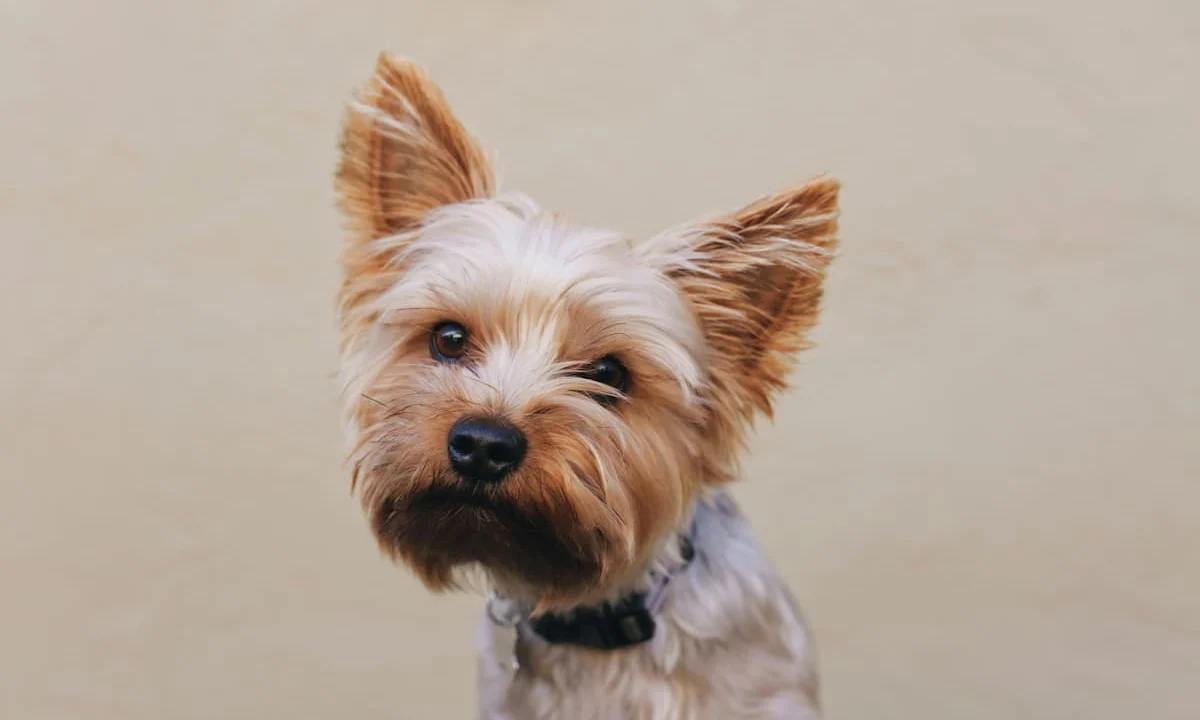
You say “Do you want to go for a walk?” and your dog freezes, ears up, and tips its head to one side. Say it again, and the head tilts the other way. It is one of the most charming things dogs do, and it is so irresistible that many owners keep talking just to see it again.
For a long time, nobody really knew why dogs do it. Researchers have now studied the head tilt directly, and they have found some fascinating clues.
A study of “genius” dogs
The most detailed research comes from the Family Dog Project at Eötvös Loránd University in Budapest, Hungary. The team had been studying “gifted word learner” dogs, rare dogs that learn the names of many toys, through a project called the Genius Dog Challenge. While reviewing videos, they noticed these dogs tilted their heads a lot.
In a study published in the journal Animal Cognition in 2021, led by Andrea Sommese, the researchers compared 7 gifted word learners, all Border Collies that knew the names of at least 10 toys, with 33 typical dogs. Owners asked their dogs to fetch toys by name, and the team counted head tilts.
The results were striking. The gifted dogs tilted their heads in about 43 percent of trials. The typical dogs did it in about 2 percent. Each gifted dog also tended to tilt to the same side every time, and its preferred side did not change based on where the owner was standing.
The researchers concluded that the head tilt may be linked to processing meaningful information, such as matching a word to a mental picture of the toy. They were careful to say that more research is needed, and that typical dogs may also tilt in other situations the study did not test.

Dogs really do process our words
That idea fits with another study from the same university. In 2016, a team led by Attila Andics scanned the brains of 13 trained dogs with an MRI while they listened to their trainer speak. Published in the journal Science, the study found that dogs process the meaning of words mainly on the left side of the brain and the tone of voice on the right side, much as people do. The brain’s reward area responded most strongly when praise words were spoken in a praising tone.
So when your dog tilts its head at the word “walk,” it may well be thinking hard about what that word means.
Listening more carefully
Hearing likely plays a part too. Dogs hear far higher sounds than we do. Studies by sensory researcher Henry Heffner found dogs can hear up to about 45,000 hertz, compared with about 20,000 hertz for people. But dogs are not as good at telling whether a sound is coming from above or below them.
Tilting the head changes the position of the ears, which can help a dog work out exactly where a sound is coming from and pick up small differences in pitch and tone. VCA Animal Hospitals notes that dogs also move their ear flaps, called pinnae, to catch sound better. A research study on dogs and wolves listening to a hidden squeaky toy found that dogs tilted their heads more when the sound came from a source they could not see, and from above or below them.
Seeing your face
Psychologist Stanley Coren of the University of British Columbia had another idea. A dog’s muzzle can block part of its view, especially the lower half of a person’s face, where the mouth shows many of our expressions. Tilting the head may give the dog a clearer look.
Coren surveyed several hundred dog owners. Overall, 62 percent said their dogs often tilted their heads when spoken to. Among dogs with longer muzzles, such as retrievers and greyhounds, 71 percent tilted often, compared with about 52 percent of flat-faced breeds like Pugs and Bulldogs. Coren called the survey a first step, since many flat-faced dogs still tilted.

We reward it, a lot
Whatever starts the tilt, people keep it going. When a dog tilts its head, most owners smile, laugh, use a high, happy voice, and often give praise or a pat. Applied animal behaviorist Jill Goldman told the American Kennel Club that the head tilt most likely repeats because it is positively reinforced. Your dog may have learned that tilting its head makes good things happen.
When a head tilt is a health problem
A quick tilt while listening is normal. A head tilt that stays put, even when nothing is being said, is different. According to PetMD and the UK veterinary charity PDSA, a constant head tilt can be caused by:
- Ear infections, especially in the middle or inner ear
- Something stuck in the ear, such as a grass seed
- Vestibular disease, a problem with the balance system that is common in older dogs. It often comes on suddenly, and many dogs improve within days
- Head injury
- Hypothyroidism, an underactive thyroid
- Less commonly, a stroke, inflammation or a tumor in the brain or ear
Contact your vet if your dog’s head stays tilted. Seek care the same day if the tilt comes with stumbling, circling, falling over, eyes that flick from side to side, vomiting, head shaking, ear scratching, a smelly ear, or confusion.
Does it mean your dog is smart?
Not necessarily. The Budapest study found that dogs who knew many toy names tilted more often, but that does not mean a dog that rarely tilts is less clever. Breed, ear shape, how you talk to your dog, and how often the tilt has been rewarded all likely play a part. If your dog tilts every time you say its favorite words, though, it is a good sign that it is paying close attention to you.