You’ve seen black, yellow and chocolate Labs, but what about silver? Are they real Labradors or something else? Here’s what’s behind the color and the controversy.
What makes a Lab silver
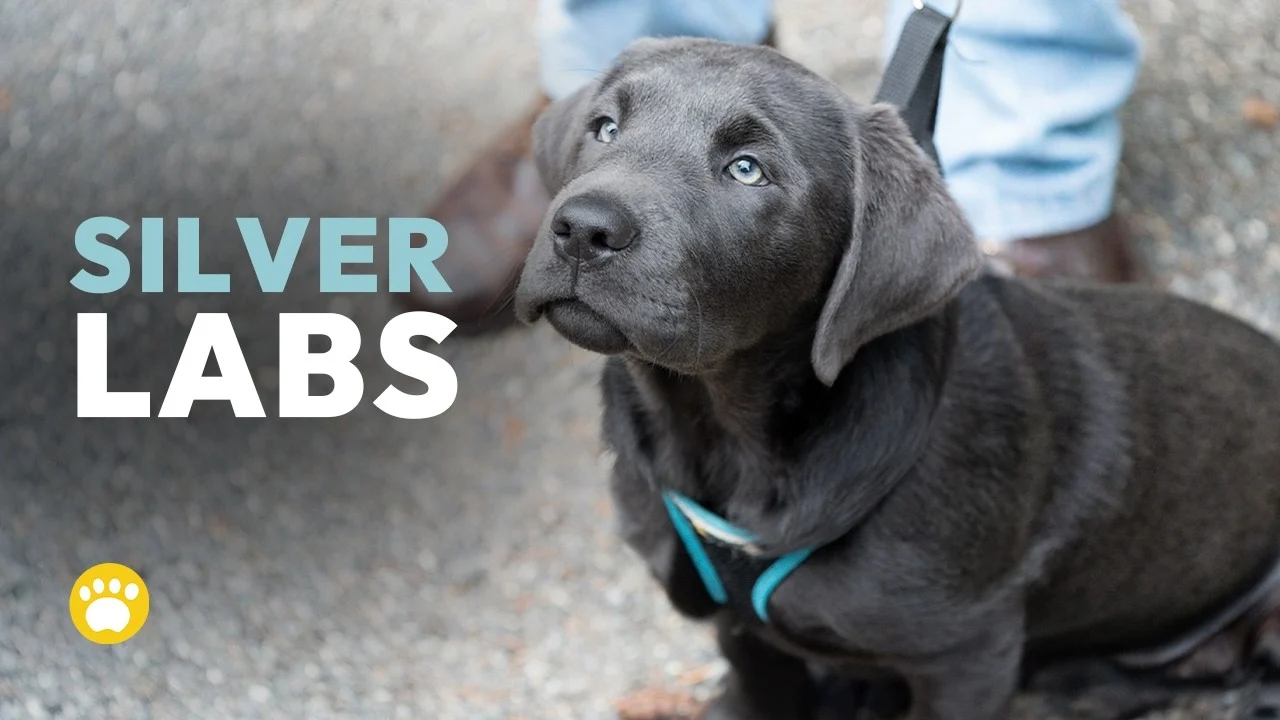
Silver Labs are chocolate Labs that inherited two copies of a recessive dilution gene, which lightens the chocolate coat to a silvery gray. Their noses, paw pads and nails tend to be lighter too.
The color genes
- B locus Black vs brown
- E locus Whether color is expressed
- D locus Dilution; two copies make silver
The debate
Some breeders believe the dilute gene was always hidden in Labradors; others think it came from crossbreeding with breeds like the Weimaraner. Nobody has solid proof either way. Kennel clubs like the AKC will register silver Labs as chocolate if both parents are recognized Labradors.

The health angle
The same gene can cause color dilution alopecia, a skin condition with thinning hair and flaky or itchy patches, usually starting within the first few years. Some silver Labs never show symptoms; others develop chronic skin issues. Treatment helps the symptoms, but hair loss is often permanent.

Otherwise, a Lab
Friendly, trainable, energetic and great with families. Males usually weigh 65 to 80 pounds and females 55 to 70, and most live around 12 years. Silver Labs are harder to find and often cost more; rescues are always an option.
Before you buy
Ask breeders about genetic testing for the dilution gene and overall health checks, so you get a dog that’s both beautiful and healthy.