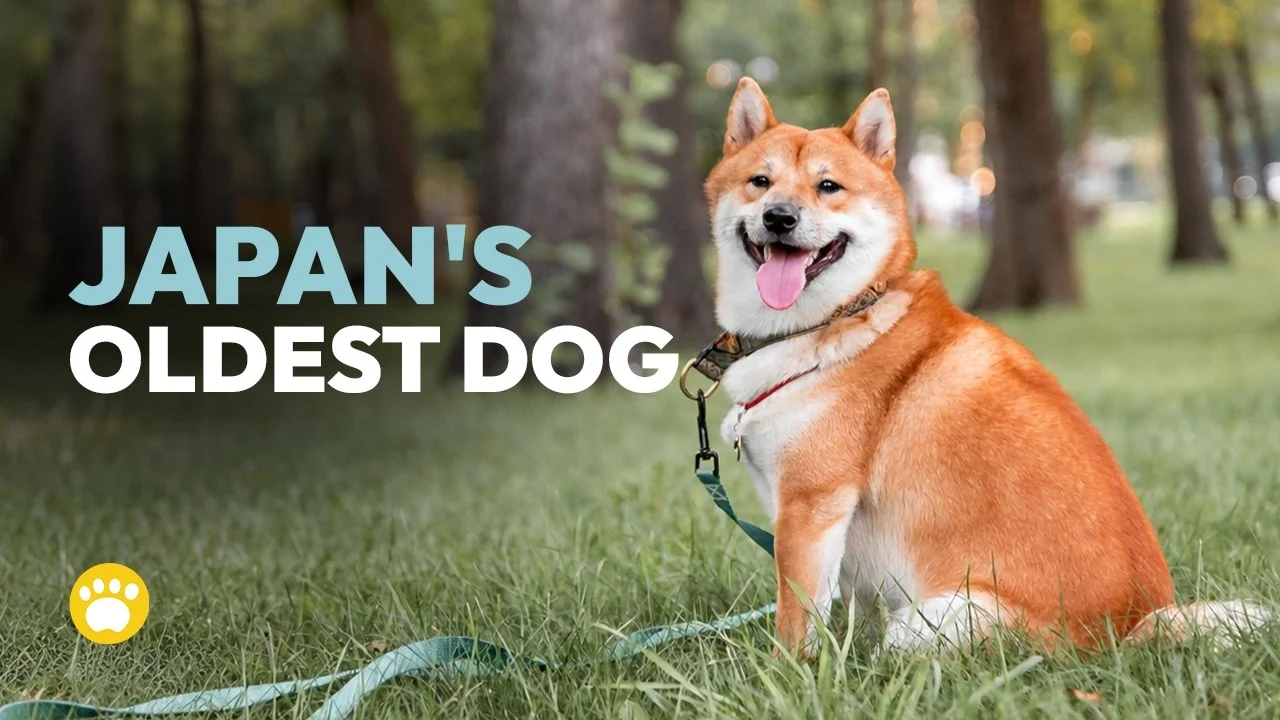
There’s a dog walking around suburban America whose genetic profile sits closer to the gray wolf than almost any other breed. It weighs about 20 pounds and looks like a fox. And twice in the last hundred years, it came close to disappearing. This is the Shiba Inu.
Shiba Inu at a glance
- Height Males about 14½ to 16½ inches
- Weight 17 to 23 pounds
- Colors Red, black and tan, sesame or cream
- AKC recognized 1992
- Lifespan 12 to 16 years
Japan’s oldest native breed
The Shiba is the smallest of Japan’s six native breeds, and the oldest. Archaeologists working shell mounds left by the Jomon people, who occupied Japan from roughly 14,500 BC to 300 AD, have found remains of small dogs in the 14 to 19 inch range. Around 300 BC a new wave of immigrants arrived with their own dogs, and the crossing produced the ancestor of the modern breed.
Inu means dog. Shiba usually translates to brushwood, pointing either to the terrain these dogs hunted or the color of autumn brushwood leaves; an older Nagano dialect uses shiba to mean small. The job was flushing birds and rabbits out of mountain undergrowth in the Chubu region.
Two near-extinctions
During the Meiji Restoration, Western breeds flooded into Japan and crossing them with native dogs became fashionable. Between 1912 and 1926, almost no pure Shiba remained. Around 1928, hunters and academics began tracking down the last unmixed dogs in remote mountain villages, an effort that became NIPPO (Nihon Ken Hozonkai), founded in May 1928 by Dr. Hirokichi Saito. In December 1936 the breed was designated a natural monument of Japan.
Then World War II nearly finished it. Bombing killed dogs outright, food shortages meant families couldn’t feed them, and some survivors were taken for fur. Distemper outbreaks in the 1950s and 1960s killed most of what was left.
Three bloodlines
The Shinshu (Nagano), Mino (southern Gifu) and San’in (Tottori and Shimane) survived, but none had enough dogs alone, so breeders combined them. Every Shiba alive descends from those lines, and because Shinshu stock was most numerous, the modern dog resembles it most.
The breed reached the United States in 1954 with an American military family; the first American litter came in 1979.

Coat: urajiro and the twice-yearly blowout
The double coat has stiff guard hairs over a dense undercoat. Every correct Shiba carries urajiro, the cream markings on chest, cheeks and belly. Twice a year the undercoat comes out all at once.
A temperament that blindsides people
A 2004 genetic study of 85 breeds placed the Shiba among a small group of basal breeds whose lineages diverged earliest. These dogs were bred to enter brush alone and make their own decisions. Experts classify the breed as high aggression, high reactivity and medium trainability. Recall is unsafe to trust in open ground, because when prey drive fires, human voices stop registering. They also scream, a high-pitched protest during nail trims or restraint.

Health risks
- Patellar luxation: a Japanese study found 35 percent of surveyed Shibas affected, the second highest rate among small breeds.
- Glaucoma: in one Japanese eye review, Shibas made up 33 percent of glaucoma cases while being 2.7 percent of the study population.
- Atopic dermatitis is common.
- GM1 gangliosidosis, an inherited neurological disorder, shows vision loss and tremors by around six months.
Two famous Shibas
Mari survived the Chuetsu earthquake in Yamakoshi, Niigata, on October 23, 2004, protecting newborn puppies in a collapsed village after her owners were airlifted out without her. Kabosu, a rescue photographed with her paws crossed in 2010, became the doge meme and later the face of a cryptocurrency. She died on May 24, 2024, at an estimated 18.
The takeaway
What people meet in the meme is a cartoon. What they get is an ancient hunting dog that survived two near-extinctions and never stopped working for itself.