For decades, dog books told the same story about this dog. Look at the tall ears, long face and lean body, and you are looking at a hunting dog of the pharaohs, unchanged for 5,000 years. Breeders pointed to Egyptian tomb art and statues of the jackal god Anubis dating back as far as 3400 BC.
Then, on May 21, 2004, scientists at the Fred Hutchinson Cancer Research Center in Seattle published a DNA study of 85 dog breeds. The Ibizan Hound did not land in the group of truly ancient breeds. The researchers concluded the modern dog was likely rebuilt more recently from a mix of other breeds.
Ibizan Hound at a glance
- Height Males up to 27½ inches
- Weight Males around 50 lb, females around 45 lb
- Speed Over 30 mph
- Fence At least 6 feet tall
- Lifespan 11 to 14 years
A rabbit hunter from a rocky island
The breed is named after Ibiza, one of Spain’s Balearic Islands. A popular story says Phoenician sea traders brought these dogs there, but nobody has proven it. What is clear is that island farmers shaped this dog for one job: catching wild rabbits for food in thick brush and old stone walls. So it hunts with three senses. Its nose finds the rabbit, its huge ears pick up the rustle in dry leaves, and its eyes lock on once the rabbit runs.
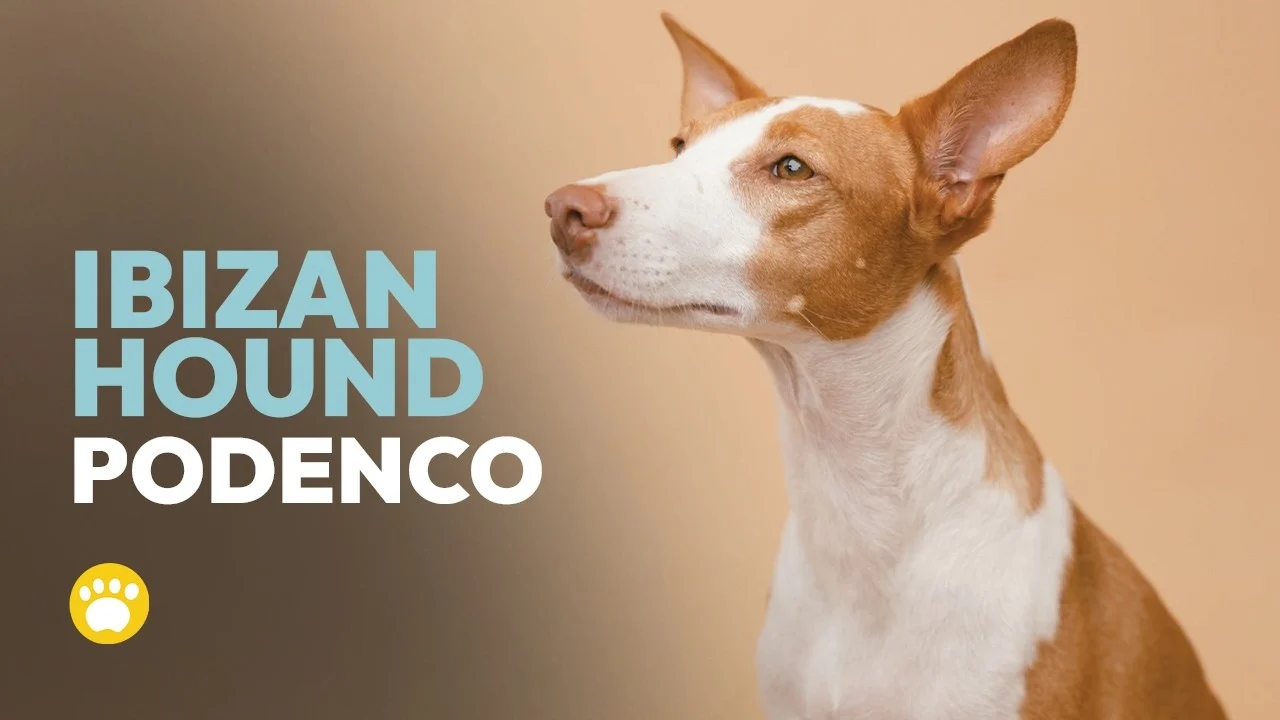
The ears stand straight up, large and pointed. The nose, eye rims and lips are pink or light tan instead of black. The coat can be smooth or wiry, in red, white or both.
The five-foot standing jump
This is the skill that surprises owners most. An Ibizan Hound can clear a five-foot fence from a standing position, with no running start. Experts recommend a fence at least six feet tall. That same spring makes them famous counter surfers.
And once loose, catching one is a whole new problem. These dogs can top 30 miles per hour; one hunting writer put their chase speed near 40. They should only run off leash inside a secure fence. Many owners channel that drive into lure coursing, a sport where dogs chase a plastic bag pulled along a track.
Life at home
The first Ibizan Hounds reached the United States in 1956, and the AKC fully recognized the breed in 1979. It remains rare, ranking 166th of 200 breeds in 2023.
- Owners describe a goofy dog that happily naps on the couch once exercised. Two walks or jogs of 20 to 30 minutes a day work for most.
- They are often reserved with strangers, and cats may look like something to chase.
- With no undercoat, they handle cold poorly and belong indoors.
- Like many lean hounds, they react badly to certain types of anesthesia, so tell your vet before any surgery.
The harder side of the story
In Spain, podencos, the wider family of hunting hounds this breed belongs to, are often treated as working equipment. Rescue groups report that many are dumped or killed when hunting season ends. Spain’s first national animal welfare law took effect on September 29, 2023, but hunting dogs were left out after pressure from hunting groups. Rescue charities in southern Spain now send many of these hounds to families around the world.
Thinking of adopting one?
Start with your fence. Measure it. If it is under six feet, that is the first thing to fix.