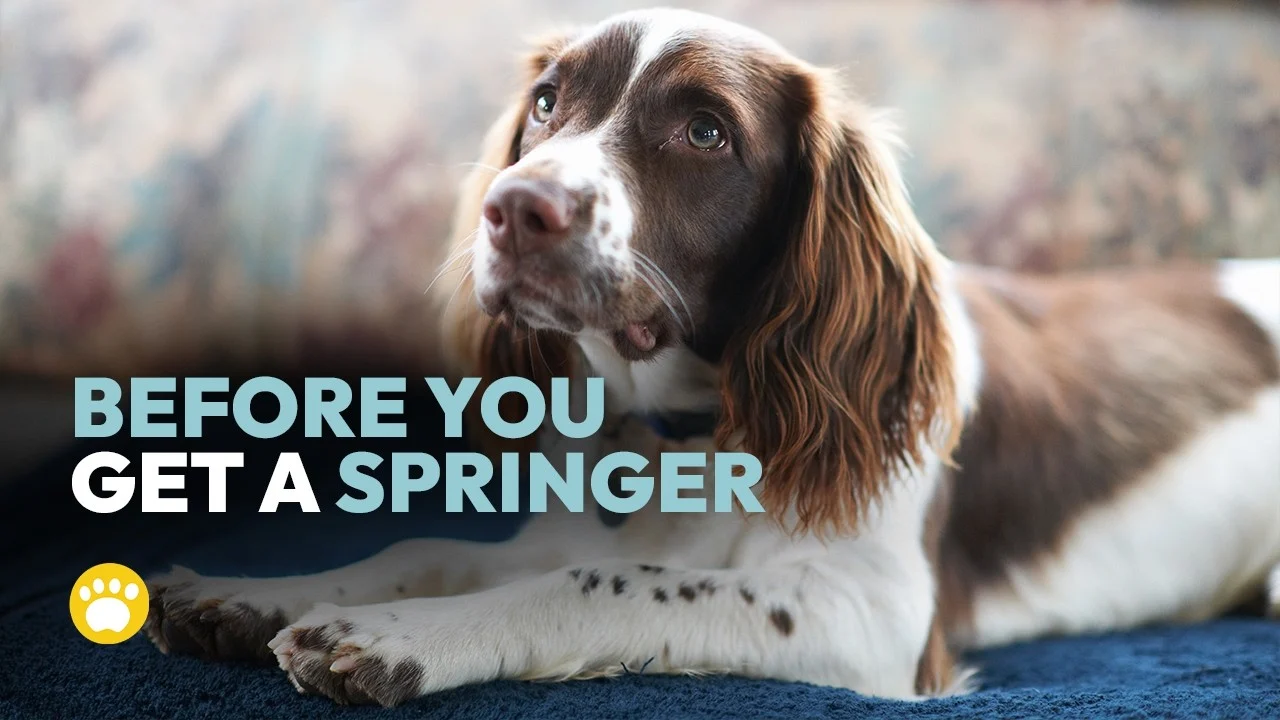
Two English Springer Spaniels can stand side by side, carry the same registration papers, and still look like they came from two different breeds. One is lean and wiry, with a short, rough coat. The other is heavier, with long flowing fur and low-hanging ears. Put the first dog in a show ring and it loses. Send the second into a field trial and it cannot keep up.
That split is only one of the surprising things about this breed. Here is what a Springer needs, what goes wrong when those needs are ignored, and whether this dog fits your home.
Springer at a glance
- Height Males 19 to 22 in; females 18 to 20 in
- Weight Males 45 to 55 lb; females 40 to 50 lb
- Exercise 60 to 90 minutes a day minimum, many do better with 2 hours
- Lifespan 12 to 14 years
- Colors Black and white, liver and white, tricolor or roan
The name tells you the job
Hunters in England needed a dog that could push through thick brush, find hidden birds and make them burst into the air. That sudden jump into flight is called springing, and the dog that caused it became known as the Springer.
Before guns were common, these dogs drove birds toward nets or trained falcons. Once shotguns arrived, the Springer picked up a second job: bringing the bird back. So this is a dog bred to search, flush and retrieve, all day, in rough terrain and in water.
Springers and Cockers came from the same litters
For a long time, Springers and Cocker Spaniels were born in the same litter and sorted by size. The smaller puppies were used on a bird called the woodcock, which is where the Cocker name comes from. The bigger, stronger ones became Springers. England’s Kennel Club recognized the Springer as its own breed in 1902, and the American Kennel Club began registering them in 1910.

Field line vs show line
Field-bred Springers are chosen for their nose, drive and trainability. They tend to be smaller, faster and lighter, often with more white in the coat. Show-bred Springers are chosen mostly for appearance: heavier bone, longer fur, fuller feathering on the ears and legs, and often more color.
Show lines can still hunt, but they work slower and are often a little calmer at home.
- Want a hiking and running partner? A field line makes sense.
- Want a family dog with less intensity? A show line is usually the easier match.
Exercise: more than a walk
Either way, this is a high-energy dog. The best routine mixes running, fetch, swimming and scent games where the dog searches for hidden treats or toys. Springers love water, so a lake or dog-friendly pond is a big win.
When a Springer does not get that outlet, the energy goes somewhere else: chewing, digging, barking or racing laps around your living room.

Why your Springer steals socks
Springers were bred to carry birds with a soft mouth, holding something gently without crushing it. That instinct never shuts off. Puppies mouth hands, grab shoes, steal socks and carry random objects from room to room.
Trying to stop it completely rarely works. The better approach is to teach a formal retrieve, so the dog has a job for its mouth. Training usually goes well: Springers are eager to please and respond strongly to food and toys. If you train only one command really well, make it the recall, because a Springer that catches a scent can disappear into the brush in seconds.
A second career at the airport
That same nose makes Springers common detection dogs at airports, seaports and border crossings, trained to find drugs, explosives, hidden cash and even smuggled phones. A happy spaniel with a wagging tail can check bags in a crowded terminal without scaring anyone.
Health: watch the ears
A Springer’s ears are long and heavy, and the ear canal is fairly narrow. That traps moisture and dirt, which makes ear infections very common, especially after swimming or a walk in the rain. Cleaning and drying the ears once a week goes a long way.
- Grass seeds can work into ears and between toes, so check after runs through tall grass.
- Joints, skin and eyes: hip and elbow problems, skin allergies and inherited eye conditions can occur.
- Weight: Texas A&M research found sporting breeds like spaniels are about 10 percent more likely to be highly food motivated. Measure every meal and count the treats.
Grooming sits in the middle range: brush a few times a week, paying extra attention to the feathering on the ears, chest, belly and legs. Show lines need more brushing than field lines.
Who should get a Springer?
People who are home a lot, enjoy being outside every day, and want a dog that follows them around. It is a poor fit for someone gone 10 hours a day. Decide on field or show line first, then ask for hip, elbow and eye results on both parents.