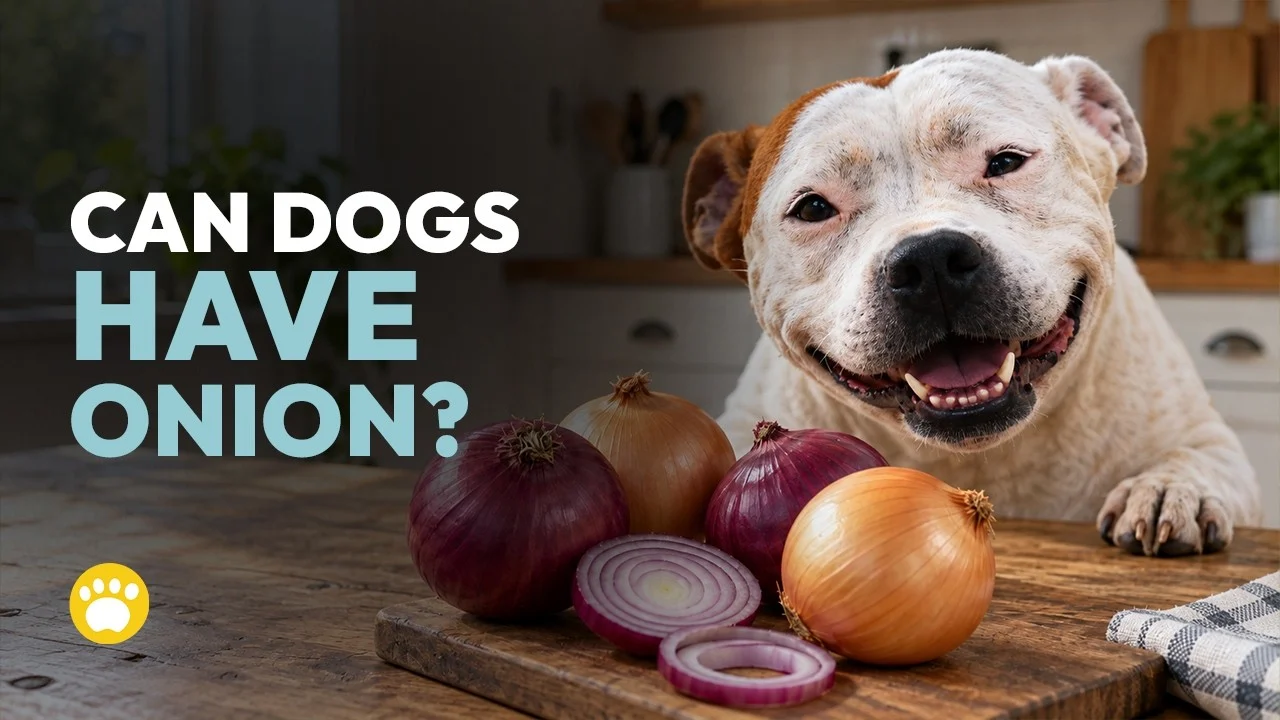
Your dog grabs a slice of pizza off the counter. It has onions on it. Your dog looks fine, wagging its tail and begging for more. So everything is okay, right? Not necessarily. Onion poisoning is sneaky, because the real damage can show up days later, long after most owners have forgotten the incident.
The short answer: no
Dogs should not have onion. Not raw, not cooked, not fried, not powdered. Onions contain a natural sulfur compound that attacks a dog’s red blood cells, the cells that carry oxygen. The damaged cells break apart faster than the body can replace them, causing a type of anemia. In severe cases it can be fatal.
How much onion is dangerous?
- The American Kennel Club puts it at about 3.5 ounces of onion per 44 pounds of body weight. A 45-pound dog could reach a dangerous level from one medium to large onion.
- Vets often use around 0.5 percent of body weight. For a 10-pound dog, that is roughly half an onion.
- Small dogs are at higher risk from the same bite, and Japanese breeds like Shiba Inus and Akitas tend to react to smaller amounts.
- Small amounts over several days can add up, just like one big meal.

Does cooking make it safe?
No. Cooking doesn’t remove the toxic compound. Dried onion and onion powder are even more concentrated. The whole onion family is a problem: garlic, leeks, chives and scallions too.
Where most poisonings actually happen
It’s rarely a whole raw onion. It’s leftovers: onion rings, pizza, burgers, meatloaf, stir-fry and casseroles. Gravy and soup broth are big ones, because they’re often made with onion powder. Even some baby food, which people use to hide pills, lists onion powder on the label.

Symptoms to watch for
- First day: some dogs vomit, drool, have diarrhea or lose interest in food. Others show nothing at first.
- Days 1 to 5: weakness, low energy, fast breathing, a racing heart and pale gums.
- Major warning sign: reddish or dark brown urine.
What to do if your dog eats onion
- Don’t wait for symptoms. Call your vet or an animal poison control hotline right away.
- Tell them your dog’s weight and roughly how much it ate.
- Don’t make your dog vomit unless a professional tells you to.
There is no antidote, but vets can remove what’s left in the stomach, give fluids, and in serious cases provide a blood transfusion. Dogs that get fast treatment usually recover well.
Your next step
Check the labels on your broth, seasonings and snack foods. Anything with onion or garlic stays on your side of the table.