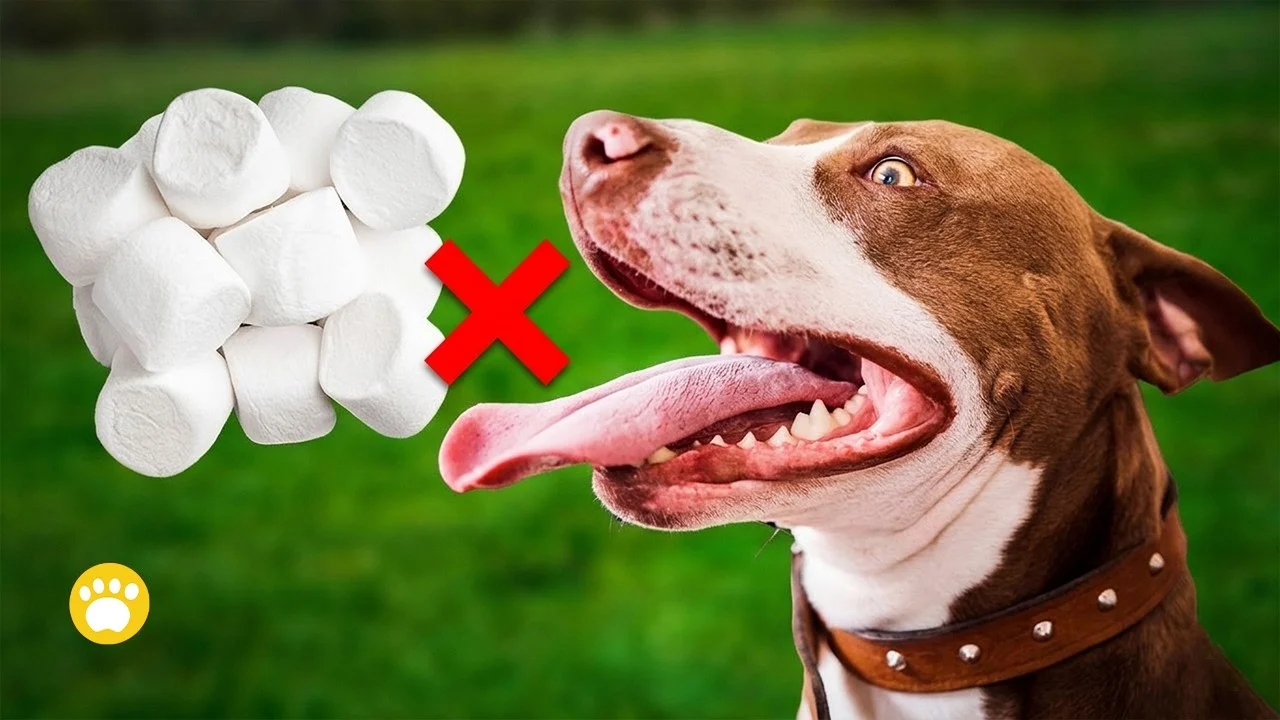
Sharing treats is a common way to show affection, but marshmallows are one human food to keep away from your dog. Here’s why.


- No nutritional benefit. Marshmallows are mostly sugar, air, corn syrup and gelatin: empty calories.
- Obesity and diabetes risk. All that sugar can lead to weight gain and diabetes, and from there heart disease and reduced mobility.
- Possible xylitol. Some marshmallows contain xylitol, an artificial sweetener that’s highly toxic to dogs. It can cause a rapid, dangerous drop in blood sugar, leading to weakness, convulsions and even liver failure.
- Digestive upset. They can cause stomach upset, vomiting and diarrhea, and regular sugary treats can contribute to pancreatitis.
- Choking and blockages. Sticky marshmallows are a choking risk, especially for small dogs, and can swell in the stomach, causing discomfort or blockages that may need surgery.
- Accidents need a vet. If your dog eats marshmallows, especially any with xylitol, get veterinary care right away. Watch for lethargy, loss of coordination and vomiting.
- Better treats exist. Carrots, blueberries and apple slices (no seeds or core), or a quality commercial dog treat.
The takeaway
The risks far outweigh the moment of fun. Check labels for xylitol on anything sweet, and reach for a dog-safe snack instead.