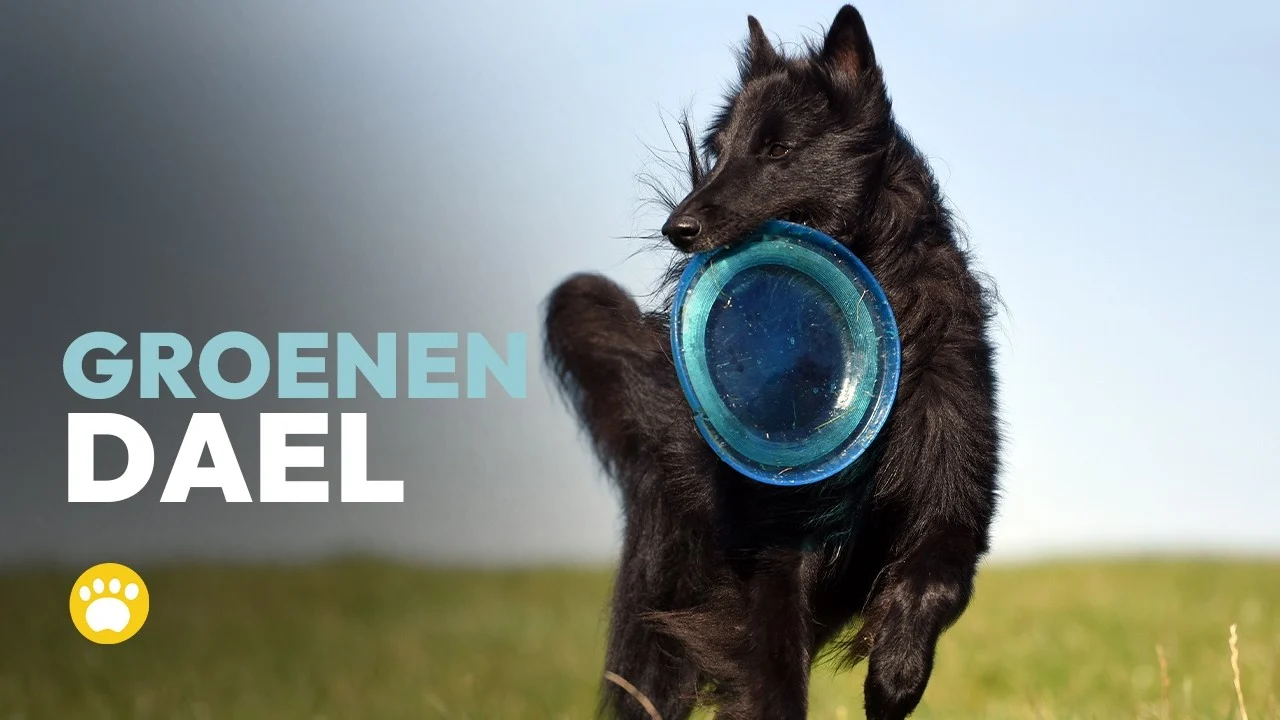
Picture a herding dog with a long, jet black coat that can run for miles, learn a new command in a few tries, and still follow its owner from room to room all day. That dog is the Belgian Groenendael, pronounced groan-en-dahl. In the United States it goes by the name Belgian Sheepdog.
Most people who see one assume it is a long-haired black German Shepherd. That guess is wrong, and the differences explain almost everything about sharing a home with this breed.
Groenendael at a glance
- Height Males 24 to 26 in; females 22 to 24 in
- Weight Males 55 to 75 lb; females 45 to 60 lb
- Exercise At least 1 hour a day, many owners say closer to 2
- Lifespan About 12 to 14 years
- Matures Mentally at around 3 years old
Not a black German Shepherd
Start with the shape. A Groenendael is built square, meaning its body is about as long as it is tall. A German Shepherd is longer than it is tall, with a sloping back. Add high, triangular ears that stand straight up, and you get a dog that looks athletic even when standing still.

The coat: beautiful, and seasonal chaos
Underneath the long, straight outer hair sits a thick undercoat that protects the dog from cold and rain. The coat should be black, though small patches of white are allowed on the chin, chest and toes.
Here is the part new owners underestimate. This dog drops its undercoat heavily, typically once or twice a year. During those weeks, daily brushing is the only way to keep hair off your floors. The rest of the year, about 20 minutes a week with a pin brush, a slicker brush and a metal comb keeps it in shape.
Shaving is a bad idea, because the coat may never grow back the same way.
Living with a herder
The Groenendael was bred to herd and guard sheep on farms, and those instincts never switched off. Give it a fenced yard and it may run in wide, sweeping circles as if gathering a flock. Without a job, it may try to herd children, cats or anything else that moves.
A healthy adult can run more than 5 miles and handle a full day of hiking. The brain needs work too. This breed learns fast and does well in:
- Obedience and agility
- Tracking and herding trials
- Search and rescue
- Therapy work
A bored Groenendael tends to dig, chew or invent its own entertainment.

A serious look, a sensitive heart
This is what surprises people most. Despite its serious working look, this is a sensitive dog. Harsh corrections can make it shut down or become hard to manage, so reward-based training works far better.
It bonds tightly with its family and does poorly when left alone for long stretches. With strangers, it usually waits and watches before deciding whether to trust them. Meeting many calm people, dogs and places during puppyhood makes a big difference in how relaxed the adult dog becomes.
It also matures slowly. Many Belgian Shepherds are not considered mentally grown up until about 3 years old, so patience through the teenage phase matters.
Health notes
The breed is generally sturdy. Conditions to watch include hip and elbow problems, eye disease and epilepsy, a seizure disorder.
One detail every owner should know: many Groenendaels are sensitive to anesthesia, partly because they carry so little body fat. Make sure your vet knows the breed before any surgery.
Who is this dog for?
Someone active, patient and home often. A family that can give daily exercise, steady reward-based training and company will get a loyal, alert, hardworking dog. A family that cannot will likely face chewing, herding of the kids, and a dog that never settles.