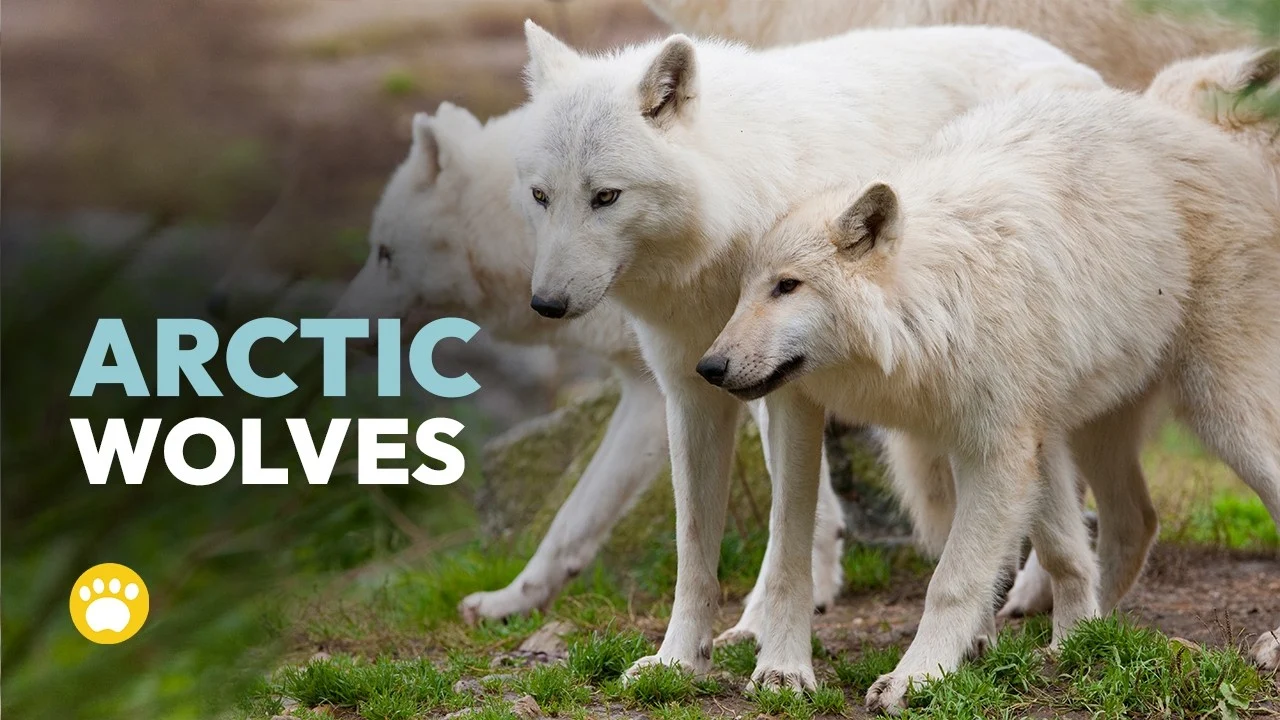
On Ellesmere Island, a few hundred miles from the North Pole, scientists found a wolf den that had likely been used more than 700 years ago: the same rock shelter, passed down through generations of white wolves. That tells you something about the arctic wolf. Once it finds a way to survive up there, it holds on to it for centuries.
Arctic wolf at a glance
- What it is A type of gray wolf
- Range Far northern Canada, northern Alaska, Greenland
- Weight About 70 to 155 pounds
- Main prey Muskoxen
- Status Least concern
White all year, born dark
The arctic wolf’s coat stays white year-round, but pups are born dark and usually turn white before their first birthday.
Surviving 63 below zero
Winter temperatures can reach −63°F. When the wolf’s paws get cold, blood flow to the feet goes up, keeping the pads near 32°F even on ice at 22 below. Fur between the pads adds grip, and short ears and a short muzzle lose less heat.

Traveling in total darkness
In July 2009, scientists put a satellite collar on the lead wolf of a pack of at least 20. By mid-April 2010 he had traveled at least 3,700 miles. Between January 19 and 28, 2010, with no sunlight at all, he made a trip of about 163 miles in a straight line and came back. His movements in the dark matched the rest of the year.
Hunting an animal several times its size
The main prey is the muskox, several times heavier than a wolf and armed with sharp horns. When wolves approach, the herd forms a tight circle with calves in the middle. Only about one attack in ten ends in a kill.
- When a hunt works, a wolf can eat around 20 pounds of meat at once, because the next meal may be days away.
- Adults carry food back in their stomachs and bring it up for the pups.
- A howl can carry up to about six miles, keeping the family together across empty land.

Wolves that don’t run from people
Because they have had almost no contact with humans, arctic wolves don’t flee from them. Biologist David Mech spent parts of 24 summers with one pack. Pups untied his bootlaces. Adults sniffed his gloves.
The real threat: weather
In the summers of 1997 and 2000, snow arrived in mid-August and stayed. Plants were buried, muskoxen and hares went hungry, and their numbers crashed. The wolves vanished from the area and didn’t raise pups there again until 2004. Normal summers brought everything back, and by 2009 packs of up to 12 adults were seen.
The takeaway
The arctic wolf still occupies nearly all of its original range. But that collapse proved one early winter can empty a territory wolves have held for hundreds of years.