In 1994, psychologist Stanley Coren surveyed 199 dog obedience judges across North America and published a ranking of breeds by how well they learn and follow commands. One breed landed dead last.
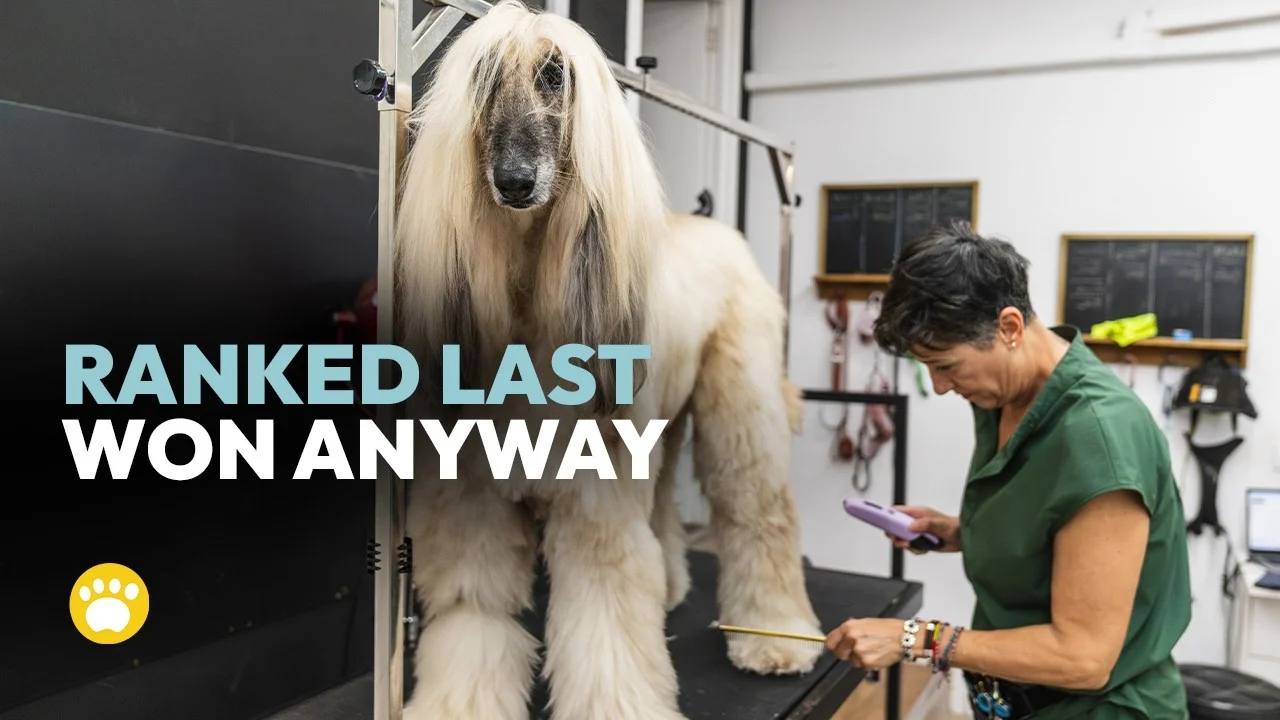
That same breed later became the first dog ever cloned. And on February 2, 2026, it beat 35 other dogs to win its group at the 150th Westminster Kennel Club Dog Show. That breed is the Afghan Hound, and the story behind its last-place ranking says more about the people doing the ranking than about the dog.
Afghan Hound at a glance
- Top speed Around 40 miles per hour
- Origin Mountains of Afghanistan
- AKC recognized 1926
- Lifespan 12 to 14 years
- Grooming Several hours of brushing a week
An ancient mountain hunter
The Afghan Hound is considered one of the oldest dog breeds, older than most modern breeds that took shape in the 1800s. In the mountains of Afghanistan it hunted gazelle, deer, foxes and wolves over rocky ground. Its long coat protected it from cold mountain weather, and its large paw pads worked like shock absorbers on uneven terrain. For a long time, Afghan owners refused to sell these dogs to outsiders.
From Kabul to Buckingham Palace
That changed when British officers started bringing them home. A dog named Zardin was shown at Crufts in England in 1909 and caused such a stir that Queen Alexandra asked to see him at Buckingham Palace. The first written breed standard, in 1912, was based on him.
The American Kennel Club recognized the breed in 1926, the same year Zeppo Marx of the Marx Brothers brought one to the United States.

What “last in obedience” actually measured
Coren’s list measured one thing: how fast a dog learns a command and how often it obeys the first time. Afghan Hounds needed more than 80 repetitions to learn something new and obeyed on the first try less than 25 percent of the time.
But this dog was bred to chase prey far away from its owner and make split-second decisions alone. Waiting for instructions would have cost it the catch. Owners describe the breed as independent, with a silly, clownish side at home and a habit of ignoring strangers completely.
The leash rule
Once an Afghan locks onto something moving, calling it back rarely works. Breed experts advise keeping them on a leash outside fully fenced areas, even after years of training, and that fence needs to be tall.
Puppies with “monkey whiskers”
Afghan Hound puppies look nothing like the adults. They are born with short, fuzzy coats and tufts of hair on their cheeks nicknamed monkey whiskers. The long adult coat starts coming in around one year of age.
From there, grooming becomes a serious commitment: several hours of brushing every week. Brushing a dry or dirty coat can damage the hair.

Snuppy, the first cloned dog
On August 3, 2005, researchers at Seoul National University announced Snuppy, the first cloned dog, and he was an Afghan Hound. The team chose the breed partly because it made the result easy to prove: Snuppy was carried by a retriever, so an Afghan puppy coming out of that dog left little room for doubt. It took more than 1,000 embryos and 123 surrogate mothers to produce him.
Health notes
- Anesthesia: Afghans carry very little body fat and can react strongly to anesthesia, so a vet familiar with sighthounds matters.
- Bloat: Their deep chest raises the risk of bloat, a sudden stomach emergency that needs a vet right away.
From last place to the top
Zaida, the six-year-old female who took the Hound Group at Madison Square Garden in 2026, had won Best in Show at the FCI World Dog Show two years earlier, beating more than 12,000 dogs. Her Westminster win was the fourteenth Hound Group title for Afghan Hounds at the Garden, proof that a dog ranked last for obedience can still reach the top.