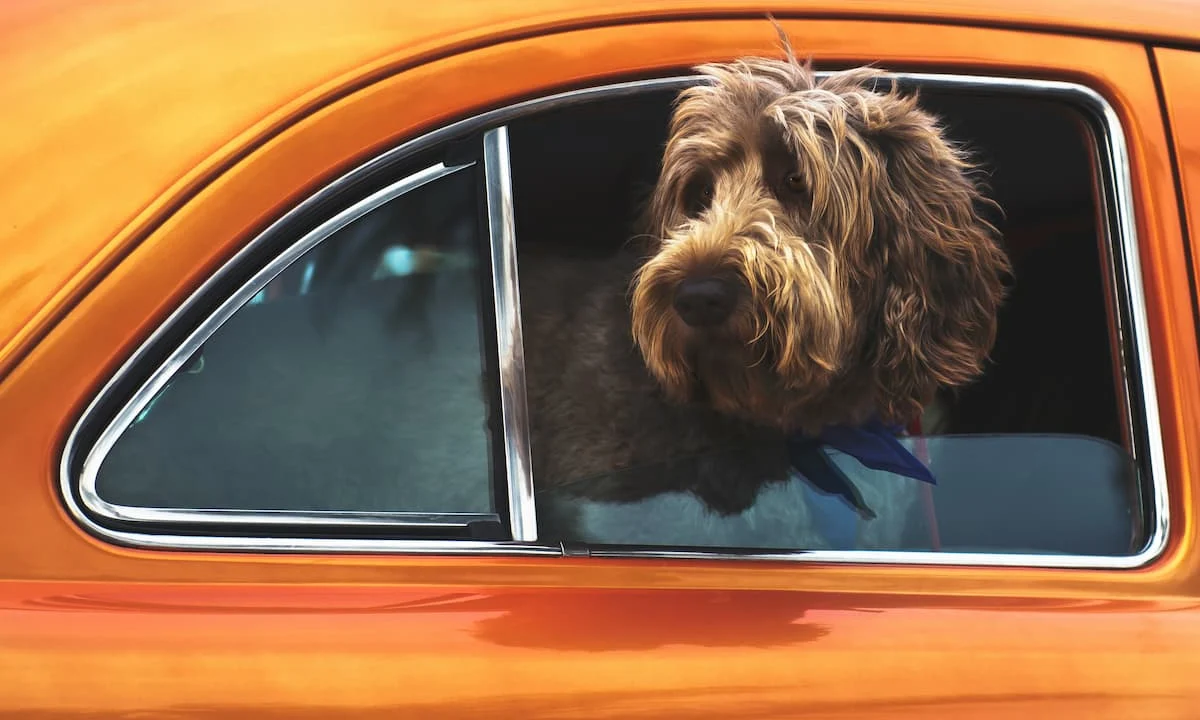
Few things look happier than a dog with its head out of a car window: ears flapping, lips blowing back, eyes half closed against the wind. It looks like pure joy. But what is your dog actually getting out of it? And is it as harmless as it looks?
Scientists have not run studies on this exact habit. What they have studied, in great detail, is the dog’s nose, and that research offers a very convincing explanation.
A nose built for the wind
A dog’s sense of smell is far stronger than ours. Experts commonly estimate it at somewhere between 1,000 and 100,000 times more sensitive, depending on the scent being tested. Dogs are usually described as having around 220 to 300 million smell receptors in their noses, compared with about 5 to 6 million in people.
Their noses also work differently. In a 2010 study published in the Journal of the Royal Society Interface, researchers at Pennsylvania State University used computer models and scans of a dog’s nasal passages to track airflow. They found that when a dog sniffs, the air splits into two paths: most heads to the lungs, while a separate stream goes to a dedicated smelling area at the back of the nose. When the dog breathes out, the air leaves through the slits on the sides of the nostrils. This swirls the surrounding air and pulls fresh scent toward the nose, so a dog can keep sniffing almost without pause.
Later work at the National Institute of Standards and Technology (NIST), using a 3D-printed model of a Labrador’s nose, confirmed that each exhale creates a jet of air that draws in scent from well in front of the nose.

So why stick it out the window?
Put that nose in a moving car, and the window becomes a firehose of information. Every few seconds the air carries something new: cut grass, a barbecue, a cat in a yard, another dog on a sidewalk, a farm, a river. As Hill’s Pet Nutrition explains, the rushing air brings a constant stream of scents, far more than a dog could ever pick up standing still. For an animal that understands the world largely through smell, it is like flipping through hundreds of TV channels at once.
Other likely reasons include:
- Sights and sounds. Moving scenery, other dogs and people all add to the excitement.
- Cooling off. Dogs cool themselves mainly by panting, and fast-moving air speeds up evaporation from the tongue and mouth.
- Feeling less queasy. Fresh air can help some dogs that get car sick. Veterinary advice for motion sickness often includes opening a window a little and keeping the car cool.
- Enrichment. Natalie Zielinski of the Wisconsin Humane Society told Discover magazine that even a window open a few inches seems to give dogs stimulation they actively seek out.
Why vets say keep the head inside
Many veterinarians and animal welfare groups advise against letting dogs ride with their heads out of the window. Hill’s notes that a rock or insect hitting a dog at highway speed can cause serious injury. The main risks are:
- Eye injuries. Dust, gravel, bugs and debris can scratch or puncture the cornea, which in severe cases can lead to permanent damage or blindness.
- Ear damage. Strong wind flaps the ears hard against the head. Over time this can break small blood vessels in the ear flap and cause an aural hematoma, a painful, swollen pocket of blood that often needs surgery.
- Falling or jumping out. News reports regularly describe dogs that leaped or fell from moving cars, some at highway speeds. A dog that spots a squirrel or another dog may jump without warning.
- Getting caught in the window. A passenger, or the dog itself stepping on a switch, can raise a power window on its neck.
- Crashes. A dog riding loose, leaning out of a window, has no protection if you brake hard or crash. It can be thrown from the car or into the dashboard and windshield, and it can injure people in the car too.

Pickup trucks
Riding loose in the bed of a pickup truck is even more dangerous. According to the Animal Legal and Historical Center at Michigan State University, several states, including California, Connecticut, Maine, New Hampshire, Rhode Island and Michigan, have laws specifically requiring dogs in truck beds to be secured or enclosed. Other states cover it under animal cruelty laws. Check your state’s rules, and when possible, keep your dog in the cab in a secured crate or harness.
How to give your dog the breeze safely
- Open the window just a few inches. A gap of about an inch or two lets the scents in, but is too small for your dog to fit its head or muzzle through.
- Lock the power windows. Use the child lock so your dog cannot open or close them.
- Restrain your dog. Use a secured, crash-tested crate or a crash-tested car harness clipped to the seat belt system. The nonprofit Center for Pet Safety has crash-tested hundreds of pet restraints since 2011, and many failed, so look for products it has certified.
- Use the back seat. Front airbags can seriously injure a dog.
- Never attach a leash to a collar in the car. If your dog jumps or is thrown, it could be strangled.
- Bring the adventure outside. Sniffing walks in new places, where your dog can explore at its own pace, give the same nose workout with none of the risks.
- Plan for heat. Run the air conditioning on warm days, and never leave your dog alone in a parked car. Temperatures inside rise quickly, even with the windows cracked.