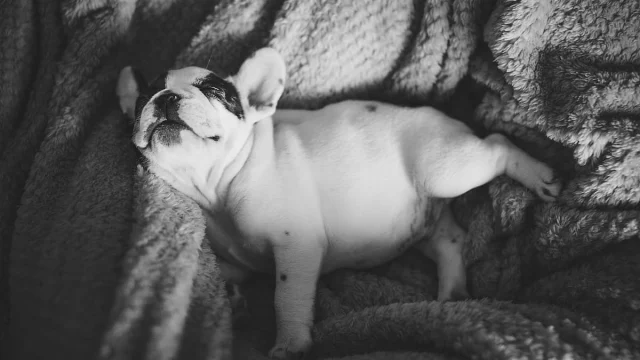
You walk through the door, and your dog runs up wiggling, ears back, tail sweeping side to side, and pulls its lips back to show a row of front teeth. To someone who does not know the dog, it can look like a snarl. To the owner, it looks like the dog is smiling.
In most cases the owner is closer to the truth. Dogs that show their teeth while their whole body is loose and wiggly are usually giving a friendly signal. The trick is learning to read the rest of the dog, because the same teeth can mean something very different on a tense dog.
The submissive grin
The expression most owners describe as a happy smile has a name: the submissive grin. Some trainers prefer to call it an appeasement grin, because the dog is trying to keep things friendly and calm.
Veterinary behaviorist Karen Overall describes it as an act of deference. The dog is showing that it means no harm. It most often happens when a dog greets someone it likes, such as an owner coming home, a favorite visitor, or a person it respects.
A submissive grin usually looks like this:
- The upper lip lifts and pulls back, showing mostly the small front teeth.
- The eyes are soft and often squinting or half closed.
- The ears are back or flattened against the head.
- The head is lowered, and the body is wiggly and loose.
- The tail wags low, often with the whole back end swinging.
- Some dogs also sneeze, snort, lick, roll over or pee a little.
Why some dogs do it and others never do
Not every dog grins. It seems to run in some breeds more than others, and trainers often mention Dalmatians, Beagles and many terriers. Even within a breed, many dogs never do it. Some puppies grin and stop as they grow up, while others keep grinning all their lives.
The habit also tends to grow with attention. People usually smile, laugh and talk sweetly to a dog that grins at them. Dogs learn quickly which behaviors bring a good reaction, so a dog that is fussed over every time it grins will often grin more.
Do dogs really smile like people?
Scientists have not proven that dogs smile because they feel happy in the same way people do. They have shown that dogs use their faces to communicate with us.
In a 2017 study published in Scientific Reports, researchers at the University of Portsmouth in England filmed 24 pet dogs while a person stood about 3 feet away, either facing the dog or turning away. The dogs made far more facial movements when the person was looking at them. Showing them food did not have the same effect. That suggests dogs change their expressions to send a message to people, and not only because they are excited.
A 2019 study in the journal PNAS found that dogs have a small muscle above the eye that lets them raise their inner eyebrows, making the classic “puppy dog eyes.” The muscle was present in every dog studied and missing in wolves. The researchers think people may have favored dogs with more expressive faces over thousands of years of living together.
The relaxed, open-mouth “smile”
There is a second expression that people often call a smile. A happy, relaxed dog often has its mouth slightly open, the corners of the lips pulled back a little, and its tongue hanging loose over the bottom teeth. This is called a relaxed open mouth. You will often see it during play, after a good walk, or when the dog is being petted.
The relaxed open mouth looks like a smile because of how a dog’s face is shaped. It usually comes with soft eyes and a loose body. Keep an eye on panting during hot weather, though. Fast, heavy panting with a wide mouth can mean a dog is too hot.
How to tell a grin from a warning
The teeth alone will not tell you what a dog means. Certified trainers stress that any dog showing teeth deserves a careful look at the whole body. If you are not sure, treat it as a warning and give the dog space.
A friendly grin comes with a wiggly body, a low wagging tail, squinty eyes, a lowered head, and a dog that comes toward you.
A warning snarl comes with a stiff, still body, a hard stare with wide eyes, the hair standing up on the back, and often a growl. In a snarl, the lips usually pull up to show the long canine teeth, the fangs at the sides of the mouth. A dog giving a warning may freeze, lean away, or hold its ground.
Dogs usually give smaller signals before they show their teeth in a threat. These include licking the lips, yawning, turning the head away, showing the whites of the eyes, and going still. Lifting the lip, growling and snapping come later. If a dog you do not know shows its teeth, stop, look away, and slowly move back.
How to respond to a grinning dog
- Never punish it. The grin is a friendly, peaceful signal. Scolding a dog for it can make it nervous and confused.
- Keep greetings calm. Talk softly and avoid leaning over the dog. Some dogs grin less when greetings are quiet.
- Turn slightly to the side. Standing side-on and not staring straight at the dog helps shy dogs feel more at ease.
- Warn your visitors. Let guests know your dog grins when it is happy, so they are not frightened. A child who does not know the dog should still let it approach first.
- Reward calm behavior. Praise and treat your dog when it greets people politely, such as sitting or standing with all four feet on the floor.
When showing teeth needs a closer look
Talk to your vet if a dog that never grinned before starts showing its teeth, especially when it is touched in a certain place. Pain can make a gentle dog defensive. Mouth problems such as a broken tooth or sore gums can also change the way a dog holds its lips.
If your dog shows its teeth along with a stiff body, a growl or a snap, work with a certified trainer or veterinary behaviorist. Never punish a growl. A dog that is punished for warning may learn to skip the warning and bite.