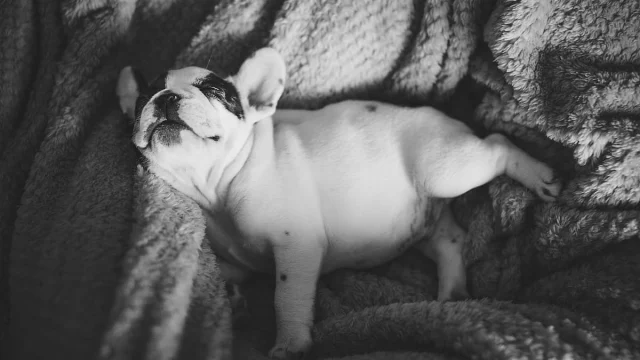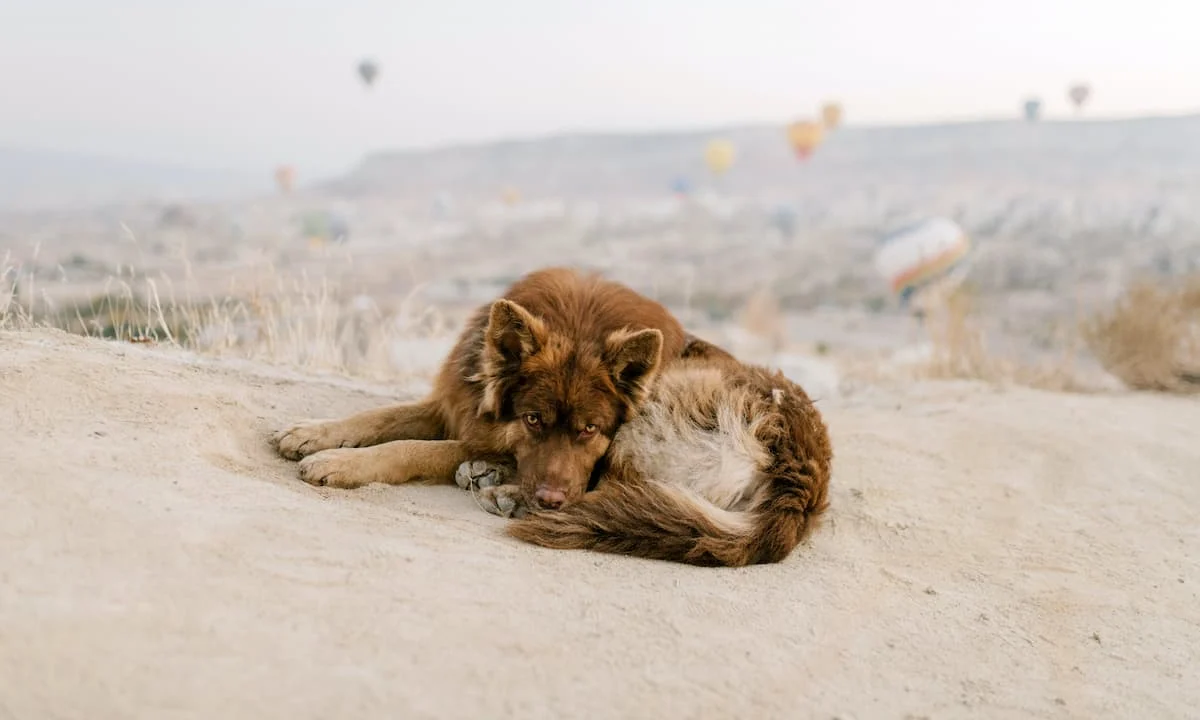
Watch almost any dog get ready for a nap and you will see the same routine. It sniffs the spot, turns around once, twice, maybe three times, scratches at the blanket or carpet, and finally drops down with a sigh. Some dogs do a quick single turn. Others spin, dig and rearrange their bed for a full minute before they settle.
The habit is so common that most owners never question it. It turns out there is a practical reason behind it, and one small experiment showed how much the surface under a dog matters.
The experiment with two kinds of floor
Psychologist Stanley Coren, who writes about dog behavior for Psychology Today, set up a simple test with 62 dogs. Each dog was brought into a room and encouraged to lie down on one of two surfaces: a smooth, flat floor covering, or a thick, uneven shag carpet.
On the smooth floor, about 19 percent of the dogs turned at least one full circle before lying down. On the shaggy carpet, 55 percent did. That made dogs nearly three times more likely to circle when the ground was lumpy. Several dogs on the shag carpet also scratched at it before turning, something none of them did on the smooth surface.
The result supports the most common explanation: circling and scratching are ways of making an uneven spot flat and comfortable.
A habit from wild ancestors
Wolves and wild dogs sleep outside, often in tall grass, leaves or snow. Turning in circles presses the grass down into a flat bed. Scratching moves sticks, stones and pine cones out of the way. Researchers who study canine behavior also suggest that trampling the spot may chase off insects or small animals hiding there.
Your dog’s bed has no grass or rocks in it, but the urge to prepare the spot is still there. A soft, loose blanket even gives a dog something to push into shape, which may be why many dogs circle more on fluffy beds than on hard floors.
Other reasons dogs circle and scratch
Getting into a curled position
Many dogs sleep curled in a tight ball with their tail over their nose. Turning around is an easy way to line the body up for that position. A curled dog keeps its belly and organs covered, holds in body heat, and takes up less space.
Adjusting the temperature
Scratching can move bedding around to make a spot cooler or warmer. On hot days a dog may dig through a blanket to reach the cooler floor underneath. Outdoors, dogs often dig shallow holes in the dirt and lie in them, because the soil a few inches down stays cooler than the air. Northern breeds with thick coats, such as Siberian Huskies and Alaskan Malamutes, are especially known for this. VCA Animal Hospitals notes that on a very hot day, almost any dog may dig a cooling hole.
Leaving their scent
Dogs have sweat glands in the pads of their feet. When a dog scratches its bed, it rubs a little of that scent onto the fabric. Some experts believe this helps mark the bed as the dog’s own. The exact role of these glands has not been studied much, so this is a likely reason rather than a proven one.
Checking the surroundings
Another idea is that a wild dog turning in a circle gets one last look and smell around before it lies down, and can settle facing the wind to catch the scent of anything approaching. Some researchers doubt this explanation. It does fit with the way many dogs choose a spot where they can see the door.
Nesting before giving birth
A pregnant dog close to her due date often digs, scratches and pulls blankets around to build a nest for her puppies. This usually starts in the last days before labor. Dogs typically give birth about 63 days after breeding. If your dog is pregnant and suddenly starts nesting, it is a good time to set up a quiet whelping area and call your vet.
What about the magnetic field?
You may have read that dogs line up with the Earth’s magnetic field. That comes from a 2013 study in the journal Frontiers in Zoology, in which researchers watched 70 dogs relieve themselves about 7,500 times over two years. When the magnetic field was calm, the dogs tended to poop and pee with their bodies facing north or south. The study won a lighthearted Ig Nobel Prize in 2014.
That research was about going to the bathroom. It did not look at how dogs lie down, and other scientists have questioned the results. There is no good evidence that dogs circle before a nap to face a certain direction.
When circling is a sign of a problem
A few turns before lying down is normal. VCA Animal Hospitals advises a vet visit if your dog:
- Circles for a long time, or in several different spots, and cannot seem to settle.
- Lies down, gets right back up, and starts circling again.
- Whines, groans or yelps while trying to lie down.
- Crouches and rises several times before lying down.
- Limps, seems stiff, or moves differently than usual.
These can be signs of pain, most often arthritis in the hips, knees or back. Lowering the body onto a sore joint hurts, so the dog keeps trying to find a better position. Pain medicine from your vet, a thick orthopedic bed and keeping your dog at a healthy weight can make lying down much easier.
Circling that happens when your dog is not trying to lie down is different. Walking in circles in one direction, especially with a head tilt, stumbling or eyes flicking from side to side, can point to vestibular disease, an inner ear or brain problem that affects balance. Older dogs that pace in circles, get stuck in corners or seem lost in their own home may have canine cognitive dysfunction, a condition similar to dementia in people. Circling that starts suddenly can be an emergency, so call your vet the same day.
Should you stop your dog from doing it?
There is no need. Circling and scratching are normal and help your dog get comfortable. If scratching is wearing holes in the couch or your dog’s bed, a few simple changes help:
- Give your dog its own bed with a loose blanket it is allowed to rearrange.
- Choose a bed with a sturdy, scratch-resistant cover.
- Keep your dog’s nails trimmed so scratching does less damage.
- In hot weather, offer a cooling mat, a shady spot or a shallow kiddie pool in the yard so your dog does not need to dig.